Why REMS is Changing the Way We Look at Bone Health
See why experts trust this advanced, radiation-free technology over traditional DXA scans
Key Studies Supporting REMS
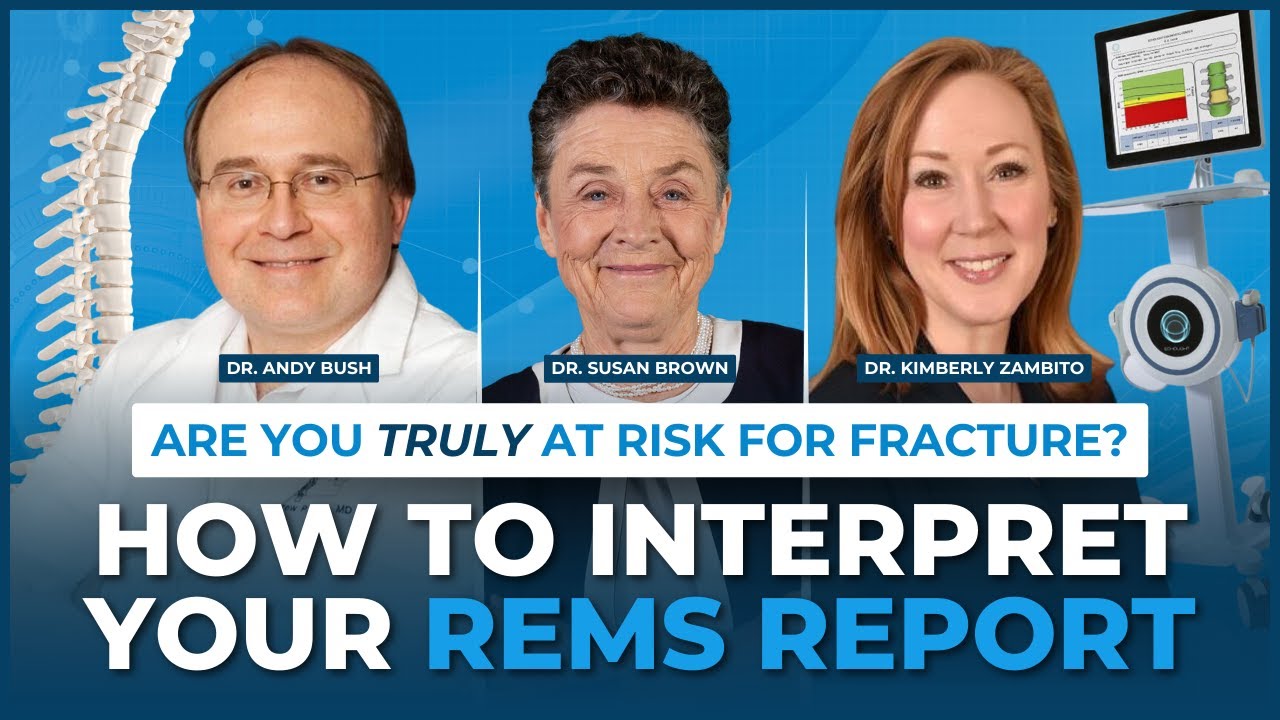
Scientific studies show REMS matches quality-assured DXA for bone density, and its results are not skewed by spinal arthritis and fractures, which can inflate DXA readings. REMS also adds a Fragility Score, which predicts fractures better than T-scores.
/01
REMS Finds Osteoporosis That Spinal Arthritis Hides From DXA
Published by: Caffarelli et al., Diagnostics, 2024
Key Finding: In patients with lumbar spine osteoarthritis, REMS classified 30.5% as osteoporotic at the spine, compared with 6.0% by DXA. DXA readings rose with arthritis severity; REMS readings did not. Why it matters: in patients with spinal arthritis, DXA can under-call osteoporosis at the spine, and REMS was not affected by how severe the arthritis was.
/02
The REMS Fragility Score Predicts Fractures Better Than T-Scores
Published by: Pisani et al., Aging Clinical and Experimental Research, 2023
Key Finding: In 1,989 patients followed for up to 5 years, the Fragility Score predicted fragility fractures better than DXA or REMS T-scores (AUC 0.81 in women and 0.78 in men, vs. 0.47 to 0.71 for T-scores). The score reflects bone microarchitecture and is independent of bone density. Why it matters: it gives clinicians and clients fracture-risk information that a T-score alone does not.
/03
Could Radiofrequency Echographic Multi-Spectrometry (REMS) Overcome the Overestimation in BMD by Dual-Energy X-ray Absorptiometry (DXA) at the Lumbar Spine?
Published by: Caffarelli et al, BMC Musculoskeletal Disorders, 2022
Key Finding: REMS technology is able to improve the accuracy of osteoporosis diagnosis in cases where lumbar BMD by DXA is impaired by artifacts from vertebral fractures or osteoarthritis.
/04
Bone Health Status Evaluation in Men by Means of REMS Technology
Published by: Adami et al, Aging Clinical and Experimental Research, 2024
Key Finding: REMS demonstrates high diagnostic accuracy and precision in evaluating bone health status in men, offering a reliable alternative to DXA.
/05
DXA Beyond Bone Mineral Density and the REMS Technique: New Insights for Current Radiologists Practice
Published by: Messina et al., La Radiologia Medica, 2024 (review)
Key Finding: A radiology review of bone imaging highlights REMS’s ability to overcome the arthritis and vertebral-fracture artifacts that typically inflate DXA bone density readings. Why it matters: it places the arthritis and fracture advantage in a broader radiology review, not only in the original research papers.
/06
DXA Errors Are Common and Reduced by Use of a Reporting Template
Published by: Krueger et al., Journal of Clinical Densitometry, 2019 (online 2018)
Key Finding: Expert review of DXA scans from 345 osteoporosis-clinic referrals found technical errors in 90% of patients and interpretation errors in 80%. Major errors, meaning ones that could lead to incorrect care decisions, were present in 42%, and 22% of those were an incorrect diagnosis. Why it matters: a DXA report is not automatically error-free, so scan quality and reporting matter to clinicians and clients alike.
/07
REMS Bone Density Is Not Determined by Age and Weight Alone
Published by: Conversano et al., Calcified Tissue International, 2026
Key Finding: In 16,000 REMS scans from women (8,000 spine, 8,000 hip), age and weight left 30% of femoral-neck bone density unexplained, and 43% at the total hip and 42% at the spine, when tested on scans not used to build the equation. The authors say a 2026 analysis reporting higher figures tested its model on the same patients used to build it. Why it matters: it addresses the concern that a REMS result simply reflects the patient’s age and weight, and supports that the result is not fixed by those two inputs alone.