
Article Summary:
- Traditional DEXA scans expose patients to low levels of X-ray radiation
- REMS technology provides zero radiation exposure for bone health tests
- The dexa vs rems radiation debate centers on safety for frequent monitoring
- Radiation-free options matter most for people who need regular bone scans
Bone density tests help doctors detect osteoporosis and fracture risk early. But many patients ask about radiation exposure when they need regular bone health monitoring.
The dexa vs rems radiation question matters because some people require annual or even more frequent scans. Traditional DEXA technology uses X-ray, while newer REMS technologies relies on ultrasound waves that produce zero radiation.
This guide breaks down what you need to know about radiation exposure from bone density tests and when each option makes the most sense.
How Much Radiation Does a DXA Scan Produce?
DEXA scans use low-dose X-rays to measure bone mineral density. The radiation exposure is minimal compared to other medical imaging procedures.
A typical DEXA scan delivers about 0.001 millisieverts (mSv) of radiation. For context, that equals roughly:
- One day of natural background radiation from the environment
- 1/10th the radiation from a standard chest X-ray
- 1/1000th the exposure from a chest CT scan
Most medical experts consider this amount negligible for occasional scans. The American College of Radiology states that the benefit of bone density information far outweighs the tiny radiation risk.
When Radiation Exposure Adds Up
The concern shifts when people need repeat scans over many years. Annual DEXA scans for a decade means 10 exposures. While still low, some patients prefer to avoid any radiation when possible.
Certain groups face higher concerns about cumulative radiation:
- Women under 50 who plan to have children
- Patients who already receive radiation therapy for other conditions
- People with genetic conditions that affect radiation sensitivity
- Those who prefer preventive health measures that minimize any potential risks
From a clinical standpoint, the actual health risk from DEXA radiation remains extremely low. But patient preference and comfort matter too.
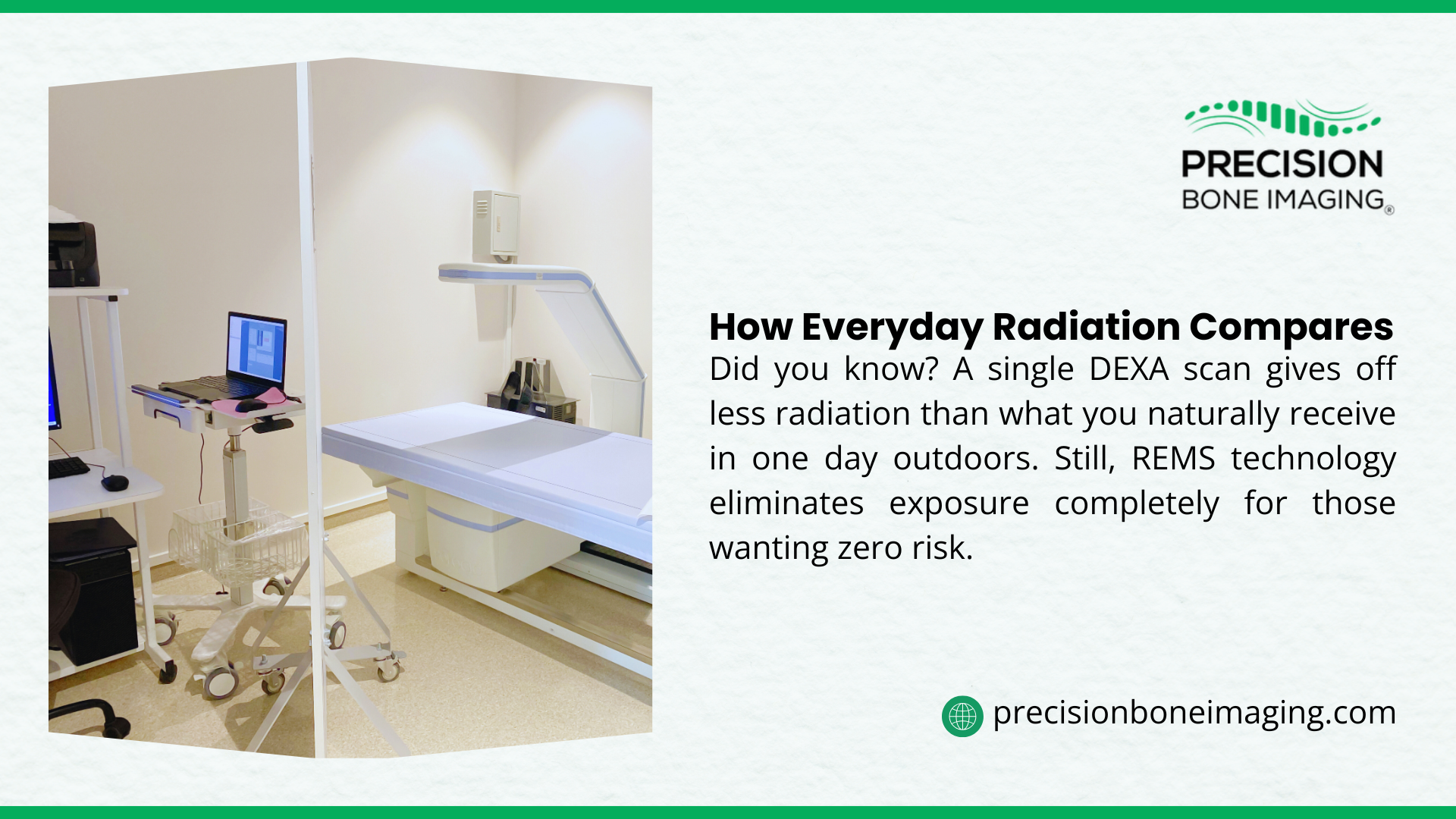
REMS Technology: The Zero-Radiation Alternative
REMS offers a complete solution to the dexa vs rems radiation debate. This technology uses ultrasound waves instead of X-rays.
Ultrasound creates images by bouncing sound waves off tissues and bones. No ionizing radiation enters your body at any point. The same safe technology used for prenatal imaging now applies to bone health assessment.
The FDA approved REMS technology for clinical use in the United States. Medical facilities in Los Angeles and Phoenix now offer REMS scans for patients seeking radiation-free bone health assessments.
How REMS Works Without Radiation
A technician places an ultrasound probe on your lower back or hip. The device sends high-frequency sound waves through your skin to the bone below.
These waves bounce back with data about:
- Bone mineral density levels
- Internal bone structure and architecture
- Microarchitecture patterns that affect strength
- Overall bone quality beyond just density
The system analyzes these signals with advanced algorithms. Results appear on screen within minutes of scan completion.
Side-by-Side Comparison: Radiation and Beyond
| Factor | DEXA Scan | REMS Scan |
| Radiation Exposure | 0.001 mSv per scan | Zero |
| Technology Type | Low-dose X-rays | Ultrasound waves |
| Scan Duration | 15-20 minutes | 15-20 minutes |
| Frequency Limits | Usually annual | As often as needed |
| Safe During Pregnancy | Not recommended | Yes, completely safe |
| Cumulative Risk | Minimal but present | None |
Who Benefits Most From Radiation-Free Bone Scans?
The choice between dexa vs rems radiation exposure matters more for specific patient groups.
- People Who Need Frequent Monitoring
Regular bone density scans help patients and healthcare providers monitor bone health over time. These scans support making informed lifestyle choices, such as diet and exercise, to maintain or improve bone strength.
With REMS, you can check bone health as often as your doctor recommends. No radiation concerns limit how frequently you monitor progress.
- Women of Childbearing Age
Doctors advise against unnecessary radiation exposure for women who might become pregnant. REMS provides a safe way to check bone health without any pregnancy concerns.
- Patients on Long-Term Monitoring Plans
Some medical conditions or medications affect bone density over many years. People with these situations face decades of potential scans.
Zero radiation per scan means zero cumulative exposure, no matter how many tests you need over your lifetime.
- Those With Radiation Sensitivity
A small percentage of people have genetic conditions that make them more sensitive to radiation effects. Others simply prefer to minimize exposure from all sources when safe alternatives exist.
Research Data on Safety and Accuracy
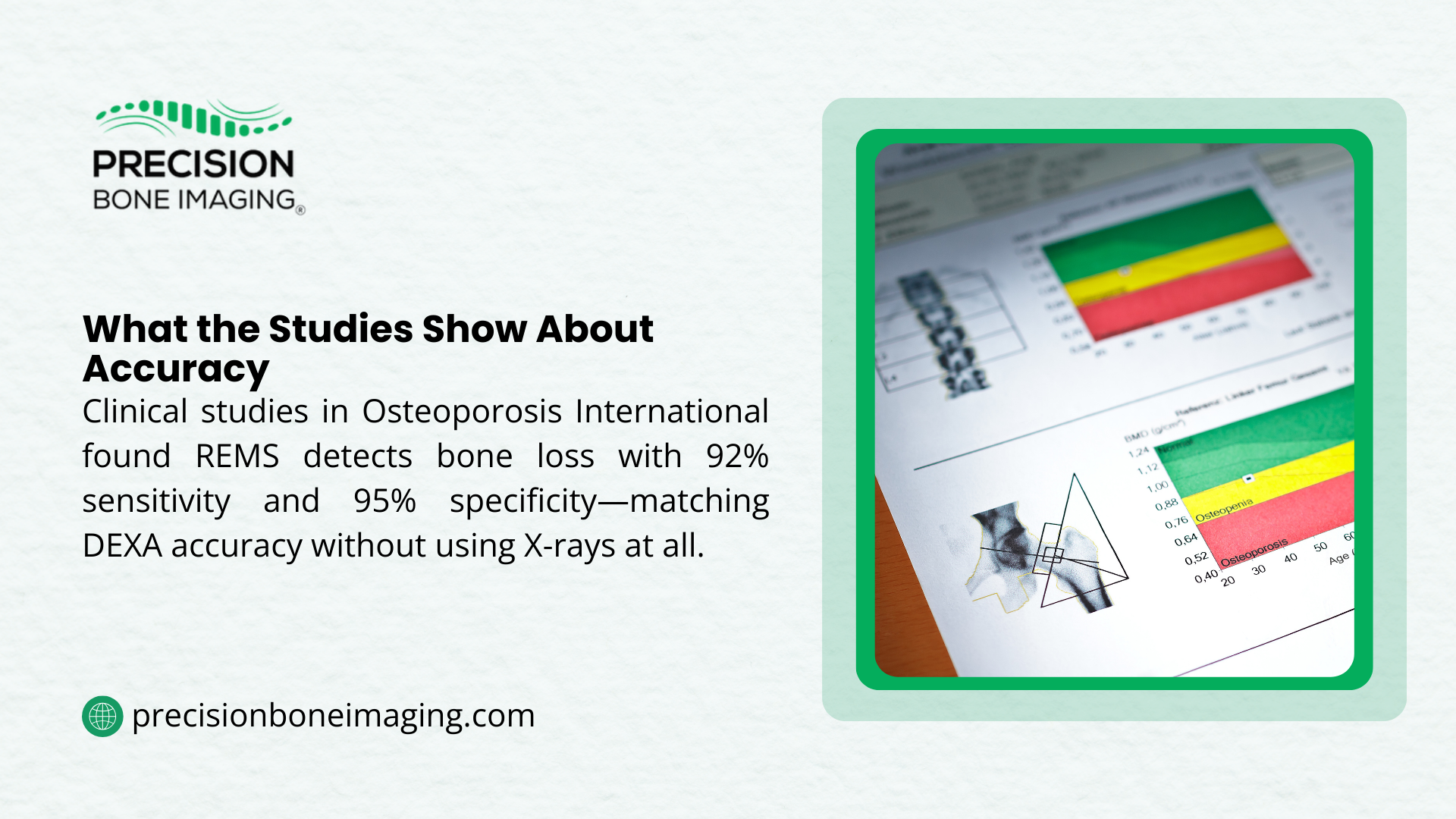
Clinical validation in large‑scale studies shows REMS technology delivers accuracy comparable to the current standard, with sensitivity and specificity above 90% in multiple anatomical sites and populations.
Because REMS uses ultrasound rather than X‑ray, it offers a radiation‑free option that supports frequent monitoring of bone health. Importantly, REMS has achieved these accuracy results using ultrasound alone, with performance comparable to DEXA scans
Another study examined precision error rates – how much results vary when you scan the same person twice. REMS showed error rates below 0.4% for both spine and hip measurements.
In my experience with diagnostic content analysis, these precision numbers match or exceed what established DEXA technology delivers. The data supports REMS as a valid medical alternative, not just a comfort option.
External research from the National Institutes of Health and Radiological Society of North America continues to evaluate both methods for long-term outcomes.
What Doctors Say About the Radiation Question
Most physicians acknowledge that DEXA radiation poses minimal risk. The American Association of Clinical Endocrinologists states current DEXA technology is “extremely safe” for standard bone density assessment.
That said, medical practice always weighs risks against benefits. When a technology offers similar diagnostic value with zero radiation, it becomes an attractive option for appropriate patients.
Doctors who work with REMS technology often recommend it for:
- Anyone requiring more frequent scans than annual intervals
- People who express anxiety about any radiation exposure
- Situations where repeat imaging helps guide treatment decisions
The choice often comes down to individual patient circumstances rather than a universal “better” option.
Cost and Access Considerations
DEXA scans have wider availability across the United States. Most hospitals and imaging centers offer this established technology. Insurance typically covers DEXA scans when medically necessary.
REMS technology is newer to the U.S. market, though it has been used in Europe since 2010. Availability remains more limited, with clinics in select cities like Los Angeles and Phoenix.
The dexa vs rems radiation advantage may justify the cost difference for patients who value zero exposure. Others might prefer to use established DEXA methods covered by their insurance plan.
Making Your Decision About REMS
Several factors should guide your choice between DEXA and REMS scans:
Choose REMS if you:
- Need frequent bone density monitoring (more than once per year)
- Prefer to avoid all radiation exposure when possible
- Want faster results with immediate feedback
- Live near a facility that offers the technology
- Have concerns about cumulative radiation from multiple scans
Where to Find Radiation-Free Bone Scans
Precision Bone Imaging offers REMS technology in the Los Angeles, Phoenix, Colorado, and Nevada areas, with more locations coming soon. Our facilities provide radiation-free bone density tests with immediate results and detailed quality analysis.
We help patients who need regular bone health monitoring without radiation concerns. Our team explains results clearly and provides action plans for bone strength.
To learn more about REMS scans or schedule an assessment, contact our locations in Southern California or Arizona.
Key Takeaways
The dexa vs rems radiation comparison highlights a meaningful difference between these bone density testing methods. DEXA uses minimal X-ray exposure that most experts consider safe. REMS provides zero radiation through ultrasound technology.
For people who need occasional bone density checks, DEXA radiation poses virtually no health risk. For those who need frequent monitoring, prefer zero exposure, or have specific medical concerns, REMS offers a validated alternative.
Both technologies serve important roles in preventive bone health care. The best choice depends on your individual needs, access to testing facilities, and personal comfort level with radiation exposure.
Important Note:
This article is made for educational purposes only and does not replace medical care. Always consult with your healthcare provider, especially if you have existing bone health concerns.