
Your bones might feel solid and unchanging, but they’re actually going through constant renewal. If you’ve discovered you have low bone density, you’re probably eager to know how long it takes to see real improvements through exercise, nutrition, and targeted interventions.
The answer is that timeframes depend on your age, current bone health, the methods you use, and how consistently you apply them. Tracking that timeline means re-testing, so many people schedule a follow-up scan appointment in Long Beach about a year after their first measurement.
Your Bone Remodeling Timeline
Your bones break down old bone tissue and replace it with new material in a process called bone remodeling. You can explore our bone health blog articles for deeper guides on remodeling, nutrition, and REMS testing. This happens constantly throughout your life, even if you can’t feel it.
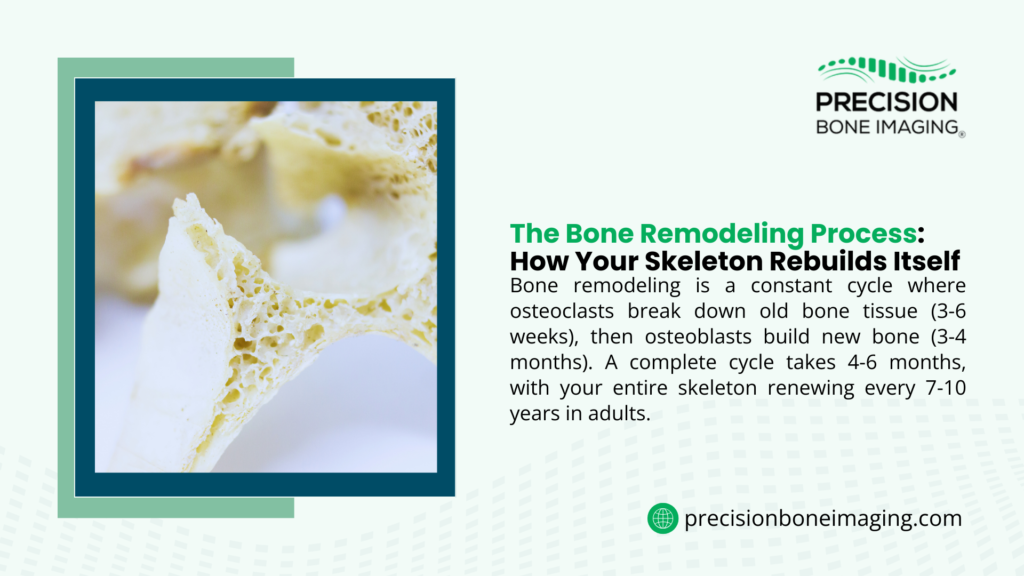
The bone remodeling cycle involves two main cell types. Osteoclasts break down old or damaged bone, which takes about 3-6 weeks at any given site and then osteoblasts move in and build new bone, which takes much longer at 3-4 months.
A complete remodeling cycle at one location in your skeleton takes approximately 4-6 months from start to finish. Your entire adult skeleton gets completely renewed about every 7-10 years, which is much slower than the 2 years it takes in growing children.
This natural timeline matters because it sets realistic expectations for how long it takes to build bone density through any intervention.
| Bone Remodeling Phase | Duration | What Happens |
| Resorption (breakdown) | 3-6 weeks | Osteoclasts remove old bone tissue |
| Reversal | Several days | Transition between cell types |
| Formation (building) | 3-4 months | Osteoblasts create new bone matrix |
| Mineralization | Additional months | New bone hardens and strengthens |
| Complete cycle | 4-6 months | Full renewal at one bone site |
How Long Does It Take to Build Bone Density with Exercise?
Exercise is one of the most effective ways to increase bone density, but results don’t appear overnight. Research from multiple studies gives us clear timelines for when you can expect to see changes.
For young adults with healthy bones, the bone-building phase takes 3-4 months at its speediest. If you have osteoporosis or you’re older, count on it taking longer because the remodeling process slows down with age.
Studies show that people who commit to dedicated exercise programs typically see measurable improvements within 6-12 months.
The landmark LIFTMOR study demonstrated that high-intensity resistance training combined with osteogenic loading produced significant bone density increases in postmenopausal women with low bone mass after just eight months.
More significant results come with longer commitment. The same LIFTMOR research showed that participants who followed a supervised program of heavy lifting and impact loading experienced increases at the total hip and lumbar spine.
These improvements are clinically meaningful for fracture prevention and demonstrate the power of combining progressive resistance training with osteogenic loading principles.
The key word here is consistent, you need to keep up with weight-bearing and resistance exercises multiple times per week, not just do them occasionally when you remember.
Which Exercises Work Best for Bone Density
Not all exercise helps build bone, you need activities that actually load and stress your bones to trigger new growth. Swimming and gentle yoga are great for other aspects of health, but they don’t do much to build bone density.
Weight-bearing exercises like brisk walking, jogging, dancing, and climbing stairs force your bones to work against gravity. Aim for at least 30 minutes on most days, these activities maintain existing bone and provide modest improvements over time.
Resistance training with weights or resistance bands provides the strongest stimulus for bone building. Exercises like squats, deadlifts, and overhead presses target the spine and hips, which are the most important sites for fracture prevention in older adults.
The LIFTMOR study showed that 8 months of supervised high-intensity resistance training increased lumbar spine bone density by 4% in postmenopausal women with osteopenia, that’s a substantial gain in less than a year.
| Exercise Type | Time to See Results | Expected Changes | Best For |
| Weight-bearing cardio | 6-12 months | Maintain density, modest gains | General bone health maintenance |
| Moderate resistance training | 6-12 months | 1-3% increase | Most adults starting out |
| High-intensity resistance | 6-8 months | 2-4% increase | People who can train hard safely |
| Balance training | 3-6 months | Reduces fall risk | Fracture prevention through falls |
How Long Does It Take to Build Bone Density with Medication?
If your doctor prescribes medication for osteoporosis, the bone density increase timeframe often shows results sooner than lifestyle changes alone, though you still need patience.
Bisphosphonates are medications which are most commonly recommended for low bone density. Studies show that after 3 years of therapy, these medications increase bone mineral density by 5-7% in the spine and 1.6-5% in the femoral neck of the hip.
However, you might see some improvement earlier than three years. Many doctors recommend bone density testing after 12-18 months of therapy to check your response. The bone strengthening timeline with these medications continues with longer use, reaching maximum benefit around the 5-year mark.
Newer anabolic medications work differently by actively building bone rather than just slowing breakdown. Parathyroid hormone analogs like teriparatide show dramatic improvements within 12-24 months, though therapy is limited to 2 years due to safety considerations.
From a clinical standpoint, medications work best when combined with proper nutrition and exercise, the lifestyle factors support and enhance the medication’s effects.
| Medication Type | Time to Results | Expected Increase | Therapy Duration |
| Bisphosphonates (oral) | 12-18 months | 5-7% spine, 1.6-5% hip over 3 years | Typically 3-5 years, then reassess |
| Bisphosphonates (IV) | 12-18 months | Similar to oral | Annual infusions for 3 years |
| Teriparatide (Forteo) | 6-12 months | Dramatic increases | Maximum 2 years |
| Romosozumab (Evenity) | 6-12 months | 11.3% spine after 1 year | Limited to 1 year |
| Denosumab (Prolia) | 12-18 months | 5-9% spine, 3-6% hip | Ongoing, must transition to another drug if stopped |
The Role of Nutrition in Bone Density Recovery Time
Nutrition doesn’t work as fast as some medications, but it provides essential building blocks your bones need for any bone density improvement timeline. Without adequate calcium, vitamin D, and protein, your body can’t build new bones effectively regardless of how much you exercise.
Getting enough calcium from food sources takes consistent daily effort. Adults over 50 need about 1,200 mg per day, which might come from three servings of dairy plus some leafy greens and fortified foods throughout the day.
Vitamin D helps your body actually absorb and use that calcium. Most adults over 50 need 800-1,000 IU daily, and many need supplements because it’s difficult to get enough from food and sunlight alone, especially in northern climates or if you spend most of your time indoors.
Protein matters more than many people realize because bones are about 30% collagen, which is protein. Adults over 60 need more protein per kilogram of body weight than younger adults, roughly 1.0-1.2 grams per kilogram compared to the standard 0.8 g/kg.
The expected time to increase bone density through nutrition alone is slow, typically 12-24 months before you see changes on a bone density scan. But nutrition works synergistically with exercise and medication, speeding up results when you combine all three approaches.
| Nutrient | Daily Need (Age 50+) | Role in Bone Building | Food Sources |
| Calcium | 1,200 mg | Main mineral component of bone | Dairy, leafy greens, fortified foods |
| Vitamin D | 800-1,000 IU | Helps absorb calcium | Fatty fish, fortified milk, sunlight, supplements |
| Protein | 1.0-1.2 g/kg body weight | Provides collagen structure | Meat, fish, eggs, dairy, legumes |
| Magnesium | 320 mg (women), 420 mg (men) | Supports bone formation | Nuts, seeds, whole grains, leafy greens |
If you’d like to learn more about supporting long-term bone health, read our guide on foods to prevent osteoporosis.
Age Makes a Big Difference in Bone Density Changes Over Time
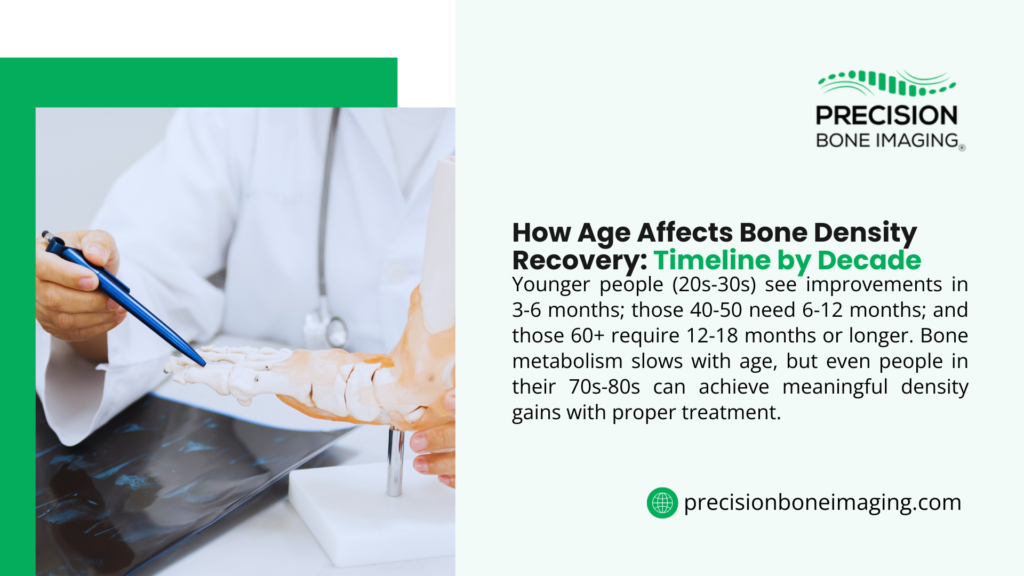
Your age significantly affects how long it takes to build bone density because bone metabolism naturally slows as you get older.
Younger individuals in their 20s and 30s may see improvements within 3-6 months with consistent effort. Their bones respond quickly to exercise and dietary changes because their remodeling process works at peak efficiency.
People in their 40s and 50s typically need 6-12 months to see measurable changes. The bone remodeling timeline starts slowing during this decade, especially for women approaching or going through menopause when estrogen drops sharply, often alongside symptoms like menopause and joint pain that signal broader changes in musculoskeletal health.
Understanding how to increase bone density after 60 becomes more challenging because the process slows considerably. Adults in their 60s, 70s, and beyond often need 12-18 months or longer to see significant improvements through lifestyle changes alone.
However, research shows that even people in their 70s and 80s can still increase bone density with proper therapy, the gains might be more modest and take longer, but they’re still meaningful for reducing fracture risk.
| Age Group | Expected Timeline | Typical Results | Special Considerations |
| 20s-30s | 3-6 months | Fastest improvements, 3-5% gains possible | Peak bone-building years |
| 40s-50s | 6-12 months | 1-3% gains with consistent effort | Menopause accelerates loss in women |
| 60s-70s | 12-18 months | 0.5-2% gains, maintenance is success | May need medications for best results |
| 80+ | 18-24 months | Modest gains, fall prevention critical | Focus on maintaining strength and balance |
What About People Who Already Have Osteoporosis?
If you’re working with existing bone density concerns, building strength takes a comprehensive approach combining multiple strategies.
While the timeline may be longer, research shows that people at any age can still make meaningful improvements that reduce fracture risk and support long-term independence.
Your doctor will probably recommend bone density testing every 12-24 months to monitor your response to therapy. Some people respond quickly to therapy with noticeable improvements in the first year, while others need 2-3 years to see substantial gains.
The severity of your osteoporosis affects how long the therapy takes. Someone with a T-score of -2.6 (just barely into osteoporosis range) will likely see faster improvement than someone with a T-score of -3.5 or lower.
Previous fractures also matter, if you’ve already had a vertebral compression fracture or hip fracture, your bones need more comprehensive support and the bone strengthening timeline extends accordingly.
From our experience, people with osteoporosis who combine exercises, proper nutrition, and fall prevention strategies show the best outcomes, even if results take 18-24 months or longer to appear on scans.
Learning about what exercises increase bone density in the spine helps target the areas most vulnerable to osteoporotic fractures.
| Osteoporosis Severity | T-Score Range | Typical Support Timeline | Expected Outcomes |
| Mild osteoporosis | -2.5 to -2.9 | 12-18 months to see improvement | 2-4% increase possible with medication + lifestyle |
| Moderate osteoporosis | -3.0 to -3.4 | 18-24 months for significant gains | 3-5% increase, fracture risk reduction |
| Severe osteoporosis | -3.5 or lower | 24-36 months or longer | Maintenance or modest gains, focus on fracture prevention |
| With previous fractures | Varies | 24-36 months | Comprehensive approach needed, multiple interventions |
What Slows Down Bone Building?
Several factors can extend the time needed to increase bone density or even prevent improvement altogether. Knowing what works against you helps you avoid sabotaging your efforts.
- Smoking
Smoking significantly impairs bone formation by reducing blood flow to bone tissue and interfering with calcium absorption. If you smoke, the bone strengthening timeline will likely take much longer, and you might not see the results you would otherwise achieve.
- Alcohol Intake
Excessive alcohol consumption (more than 2-3 drinks per day) interferes with bone remodeling and increases fracture risk through multiple mechanisms. Moderate drinking (1-2 drinks per day) generally doesn’t harm bone health in most people.
- Medications That Slow Bone Formation
Certain medications slow bone formation even while you’re trying to build density. Long-term corticosteroid use, some diabetes medications, and proton pump inhibitors for acid reflux can all interfere with bone metabolism. Don’t stop any prescribed medications without talking to your doctor, but do discuss whether alternatives exist.
- Low Body Weight and Inadequate Nutrition
Very low body weight or eating disorders severely impact bone health. Your body needs adequate calories and nutrients to build bone, extreme calorie restriction or excessive exercise without enough food intake works against bone density recovery time.
- Medical Conditions
Underlying health conditions like celiac disease, inflammatory bowel disease, hyperthyroidism, or parathyroid conditions can prevent bone building no matter what you do. If you’re not seeing expected improvements, your doctor should check for these conditions.
Why Precision Matters in Tracking Your Progress
Building stronger bones requires accurate insights into whether your approach is working.
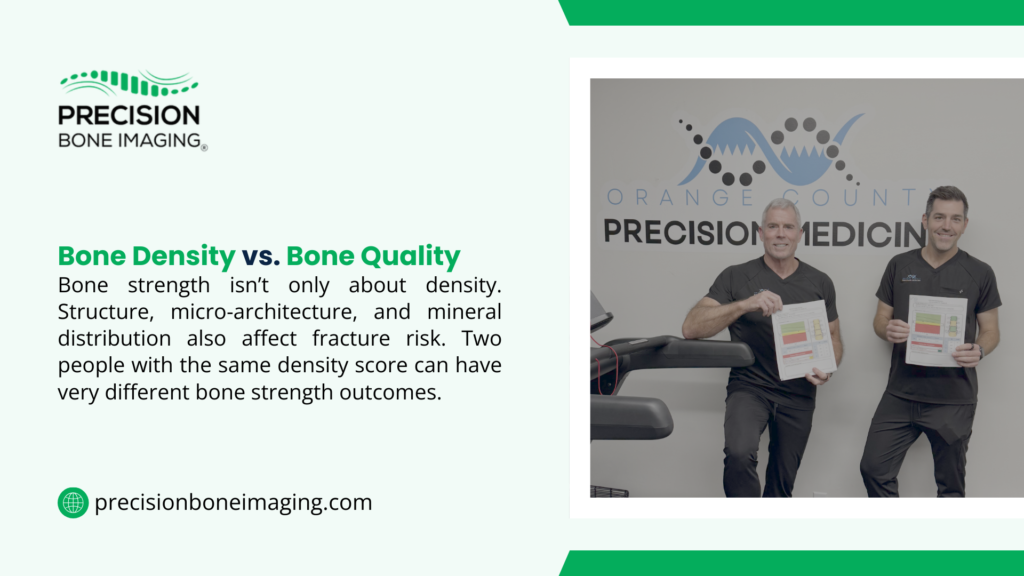
Traditional bone density scans only measure one aspect of bone health, but bone quality matters just as much as density. Two people can have identical density scores but vastly different fracture risks based on bone quality and structure.
REMS technology provides up to 30% more accurate fracture risk assessment compared to traditional methods by analyzing both density and quality.
This precision gives you the clarity and confidence to adjust your exercise, nutrition, and lifestyle choices based on real data—not guesswork.
Regular monitoring every 6-12 months shows exactly how your bones are responding to your efforts. What you measure gets managed, and tracking your progress builds motivation while ensuring you’re investing your time and energy in the strategies that actually work for your unique body.
Take Control of Your Bone Health Today
Understanding how long it takes to build bone density helps you set realistic expectations and stay committed to the process, which is essential for preventing osteoporosis and reducing long-term fracture risk.
Most people need at least 6-12 months to see measurable improvements through lifestyle changes, while medications may work somewhat faster.
The timeline varies based on your age, starting point, consistency with therapy, and whether you combine multiple approaches. Younger people generally see faster results than older adults, but people at any age can still make meaningful improvements.
Precision Bone Imaging uses advanced REMS technology to give you comprehensive insights into both bone density and bone quality, without any radiation exposure.
For people researching DEXA vs REMS radiation, REMS offers the advantage of zero radiation exposure while still delivering clinically meaningful bone health data.
With instant results and no radiation exposure, you can track your progress as you work to strengthen your bones.
Book your radiation-free bone density scan today to establish your baseline and create a personalized plan for improving your bone health over the coming months and years.
Frequently Asked Questions On How Long It Takes To Build Bone Density
How long does it take to build bone density with calcium supplements alone?
Studies show that calcium with vitamin D can slow bone loss but typically doesn’t reverse existing deficits, but many people need 6-12 months of combined interventions to see results. You need exercise and possibly medication along with proper nutrition to actually build bone.
Can you build bone density after menopause, and how long does it take?
Yes, postmenopausal women can increase bone density through proper guidance, though it takes longer than in younger women. Medications can speed this process, with some women seeing 3-7% increases over 2-3 years.
How quickly do bisphosphonates increase bone density?
Bisphosphonates typically show bone density increases of 5-7% in the spine and 1.6-5% in the hip after 3 years of therapy. Some improvement may be visible on scans after 12-18 months, but maximum benefits usually appear around the 5-year mark.
Will my bone density improvements last if I stop exercising?
Bone density gains from exercise aren’t permanent if you stop the activities that built them. Research shows that when people discontinue resistance training, they begin losing the bone density they gained within 6-12 months.
How long after starting therapy should I get a follow-up bone density test?
Most doctors recommend follow-up bone density testing 12-24 months after starting therapy. Testing sooner than 12 months usually doesn’t show reliable changes because bone remodeling takes time.
Important Note:
This article is made for educational purposes only and does not replace medical care. Always consult with your healthcare provider, especially if you have existing bone health concerns.