
Article Summary
- Bone density scan frequency depends on your T-score, age, and personal risk factors
- Women should get 2 baseline data points before menopause
- Regular monitoring every 6–12 months is the most effective way to stay ahead of changes
- With REMS’s Least Significant Change of just 1%, meaningful shifts are detectable at every visit.
- Radiation-free REMS assessments deliver both bone density and quality data — with zero radiation exposure
More than 54 million Americans have low bone density or osteoporosis, yet most remain unaware of their status until a fracture occurs. That gap between risk and awareness is exactly why how often you should get a bone density scan matters.
This guide written from Precision Bone Imaging’s expertise, breaks down who needs a scan, when to repeat one, and what factors shape your personal timeline. You will have a complete article with tables, result-based guidance, and clear next steps.
What Is a Bone Density Scan and Why Frequency Matters
A bone density scan measures the mineral content of your bones at the spine and hip, the two sites most vulnerable to fracture as bone mass declines with age.
The traditional method is DXA (Dual-energy X-ray Absorptiometry). It produces a T-score that shows where your bone density falls relative to a healthy young adult reference range.
A newer and increasingly preferred option is REMS (Radiofrequency Echographic Multi-Spectrometry). Unlike DXA, REMS uses ultrasound waves and carries zero radiation.
REMS also evaluates bone quality alongside density, which gives a far more complete picture of fracture risk. For adults who want clarity without radiation, a DXA scan alternative such as REMS offers a clinically validated, radiation-free path.
| Feature | DXA Scan | REMS Assessment |
| Radiation exposure | Low but present | None |
| Measures bone density | Yes | Yes |
| Measures bone quality | No (unless it TBS) | Yes |
| Granular measurement of bone quality | No (even with TBS only one of three categories) | Yes. Fragility Score ranges from 0 to 100. |
| Affected by arthritis or implants | Yes | No |
| Fracture risk accuracy | Standard | Up to 30% more accurate² |
| Results availability | Days to weeks | Instant |
Factors That Determine How Often Should You Get a Bone Density Scan
How often you should get a bone density scan depends on a combination of factors your healthcare provider should review alongside your scan findings.
| Risk Factor | Impact on Scan Frequency |
| Women before menopause (women) / 50+ (men) | Baseline assessment recommended; repeat based on results |
| Early menopause (before age 45) | More frequent assessment may be warranted |
| Long-term corticosteroid use | Annual or biennial assessment often advised |
| Prior low-trauma fracture | Shorter repeat interval required |
| Family history of osteoporosis | Earlier baseline and closer follow-up surveillance |
| Low body weight (BMI under 18.5) | Higher risk; earlier and more frequent assessment |
| Sedentary lifestyle | Contributes to lower bone mass over time |
Age and Gender
Age is one of the most consistent predictors of bone decline. Women lose bone density at an accelerated rate starting in perimenopause after menopause due to falling estrogen levels. Men face a slower but equally real decline after age 50.
For adults in this category who have not yet had a baseline assessment, getting a bone density test is the essential first step toward genuine clarity about your current status.
Medical Conditions and Medications
Long-term corticosteroid use (such as prednisone prescribed for arthritis or autoimmune conditions) is one of the strongest contributors to accelerated bone loss.
Other medications such as certain antidepressants, proton pump inhibitors, and anticonvulsants can also affect bone metabolism over time.
Conditions such as hyperthyroidism, celiac disease, rheumatoid arthritis, and chronic kidney disease all raise the rate of bone turnover. If any of these apply, a shorter repeat interval which can be every 6 to 12 months, may be appropriate.
Family History and Genetics
A direct family history of osteoporosis raises your personal fracture risk independent of your own scan results. Research estimates that genetics account mostly for the variation in bone density between individuals.
This does not mean low bone density is inevitable. It means your surveillance timeline may need to start earlier and run closer together than standard population guidelines suggest.
Lifestyle and Activity Level
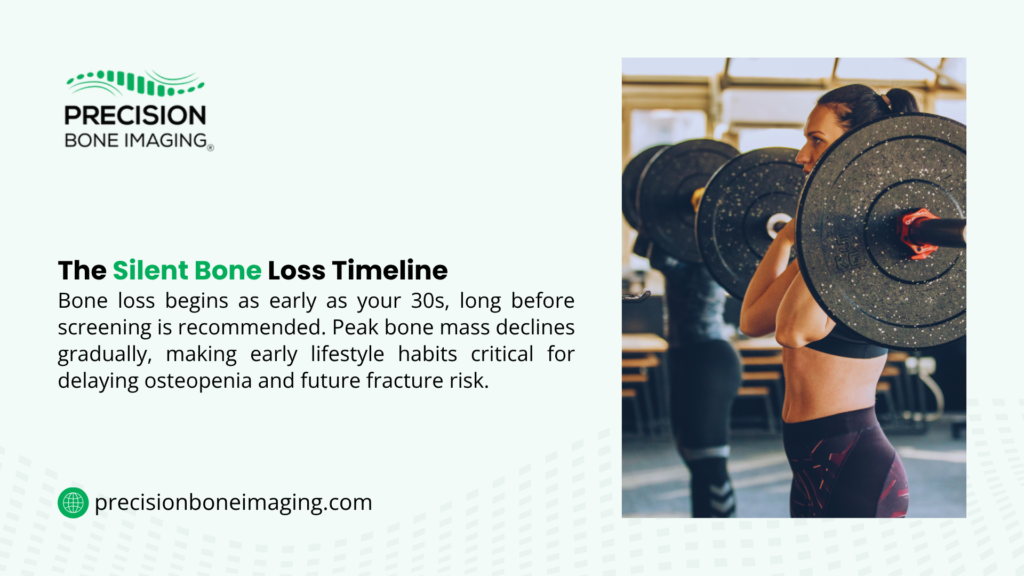
Weight-bearing activity and resistance exercise are among the most powerful modifiable factors in bone health. Adults with a consistent high-load exercise routine tend to maintain stronger bones for longer.
Sedentary adults, those who smoke, and people with high alcohol intake face measurably higher rates of bone loss.
These factors affect not just how often to scan, but how urgently to start.
Recommended Bone Density Scan Frequency by Result Category
Once you have a baseline scan, your T-score is the starting point — not the final word. Bone density and quality shift over time in response to age, hormones, medications, and lifestyle.
That is why regular reassessment every 6 to 12 months is the most effective way to stay ahead of changes before they become harder to address.
What makes this timeline clinically meaningful with REMS is its precision. REMS has a Least Significant Change (LSC) of just 1%, compared to 4–6% for DXA.
In practice, this means REMS can detect real, measurable changes in bone at the 6-month mark, changes that a DXA scan simply would not register.
More frequent monitoring is not just convenient with REMS. It is scientifically justified.
The table below outlines what each result category means and the monitoring approach that supports the best outcomes at each stage.
| Result Category | T-Score Range | Recommended Monitoring |
| Normal bone density | -1.0 or above | Reassess every 6–12 months to confirm stability |
| Mild osteopenia | -1.0 to -1.49 | Reassess every 6–12 months; prioritize lifestyle factors |
| Moderate osteopenia | -1.5 to -1.99 | Reassess every 6–12 months; review nutrition and exercise |
| Advanced osteopenia | -2.0 to -2.49 | Reassess every 6–12 months; discuss supplementation with your provider |
| Osteoporosis | -2.5 or below | Reassess every 6–12 months to track your bone health plan progress |
This assessment is for informational purposes only and does not replace medical care.
How Often Should You Get a Bone Density Scan With Normal Results?
A normal T-score (-1.0 or above) is encouraging, but it is not a permanent status. Bone density shifts with age, hormonal changes, and lifestyle — often gradually and without any symptoms.
Reassessing every 6 to 12 months gives you a reliable picture of whether your bone health is holding steady or beginning to shift.
If your circumstances change (a new medication, a fall, a fracture, or premature menopause) maintaining that monitoring schedule becomes even more valuable.
To support continued bone strength between assessments, review the evidence-based strategies in our guide on how to increase bone density.
Osteopenia
Low bone mass does not mean osteoporosis is inevitable, but it is a signal that closer attention is warranted. Reassessing every 6 to 12 months is the most effective approach at this stage.
It gives you a clear, ongoing picture of whether your nutrition, exercise, and supplementation efforts are producing results before bone loss has the chance to progress further.
Osteopenia is the window where consistent action matters most. Regular monitoring is what turns that window into a real opportunity to build strength back up.
Resistance exercise, adequate nutrition, and fall prevention all become higher priorities here.
Osteoporosis
Once you have started a bone health plan (whether that includes nutrition, supplementation, loading exercise, or hormonal support) knowing whether it is actually working requires consistent follow-up.
Reassessment every 6 to 12 months provides that clarity.
This is where REMS offers a distinct advantage that goes beyond radiation-free convenience.
Because REMS has a Least Significant Change of just 1%, it can detect meaningful improvements in bone quality and density at the 6-month mark — well before DXA’s 4–6% threshold would register any difference.
That level of sensitivity means you are not waiting a year or more to find out if your efforts are paying off. You get real answers, on a timeline that keeps your bone health plan moving forward.
What to Expect During Your Scan
Both DXA and REMS assessments are quick, non-invasive, and comfortable. No special preparation is required for most scans beyond avoiding calcium supplements for 24 hours beforehand.
| Scan Type | Duration | Radiation | Comfort Level | Results |
| DXA | 10–20 minutes | Low | High | Days to weeks |
| REMS | 10–15 minutes | None | High | Instant |
A REMS assessment applies ultrasound waves to the hip and lumbar spine.
There is no table, no compression, no radiation, which makes it well-suited for adults who need more frequent reassessment, prefer to avoid cumulative exposure, or have metal implants that would distort DXA accuracy.
Findings are available immediately after the session, with a clear summary of both bone density and quality.
Insurance, Cost, and Access Considerations
Insurance Coverage Tips
Medicare Part B covers one DXA scan every 24 months for eligible adults, with more frequent coverage available when medically necessary.⁸
Coverage for repeat scans under 24 months often requires documentation of medical necessity such as a new fracture, a change in care plan, or a condition known to accelerate bone decline.
Before you schedule, confirm the following with your insurer:
- Whether a physician referral is required
- The covered frequency under your specific plan
- Whether your preferred scan type qualifies for coverage
Reducing Costs
Bone health clinics with REMS technology are often priced competitively relative to hospital-based DXA scans. Clinics in Los Angeles and Phoenix provide direct-access REMS assessments — in many cases without a physician referral.For a full breakdown of costs and coverage options, visit our resource on Bone Density Scan Cost and Insurance.
How to Make the Most of Your Scan Results
A scan result is not just a number. Your T-score, combined with your age, risk factors, and bone quality data, forms the foundation of a practical action plan.
| T-Score Range | Lifestyle Priority | Supplement Focus |
| -1.0 or above (Normal) | Weight-bearing exercise, adequate protein | Vitamin D, calcium-rich whole foods (leafy greens, almonds, fortified options) |
| -1.0 to -1.99 (Osteopenia) | Resistance exercise, fall prevention | Vitamin D, Magnesium, Collagen peptides |
| -2.5 or below (Osteoporosis) | Supervised exercise, balance-focused movement | Full bone-support protocol under provider guidance |
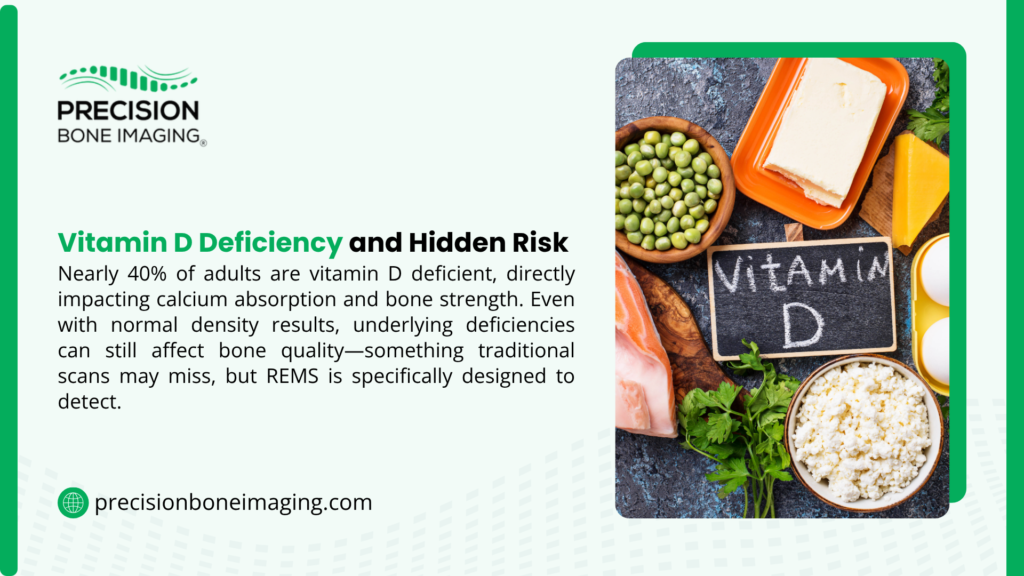
Bone quality data from REMS adds a layer that density alone cannot capture. Two people with identical T-scores can carry meaningfully different fracture risk based on structural bone quality. Knowing both gives you a far more accurate foundation for next steps.
This assessment is for informational purposes only and does not replace medical care.
Take the Next Step With Precision Bone Imaging
Bone health is not a one-time check. It is an ongoing part of longevity, and the earlier you start, the more options you have to act on what you find.
Precision Bone Imaging provides radiation-free REMS bone health assessments at clinics in Los Angeles and Phoenix. Each session delivers instant findings on both bone density and quality, with clear guidance on what your results mean and where to go from here.
REMS technology is FDA-registered, CE-marked, and validated to offer up to 30% more accurate fracture risk assessment compared to traditional DXA, with 40% greater sensitivity to changes in bone quality.
Here is what sets a REMS assessment apart:
- Zero radiation exposure — safe for frequent and repeat assessments
- Instant results, available the same day
- Not affected by arthritis, scoliosis, or metal implants
- Complete picture of both bone density and structural quality
Book your radiation-free bone health assessment today. Know your strength. Protect your future.
FAQs About Bone Density Scan Frequency
How often should you get a bone density scan if your first result is normal?
Even with a normal T-score, reassessing every 6 to 12 months ensures you catch any gradual shifts before they progress.
Is a bone density scan every 6 to 12 months necessary?
Yes, regardless of your result category, reassessing every 6 to 12 months is the most effective way to track real changes and confirm your bone health plan is working.
Will insurance cover repeat bone density scans?
Medicare covers DXA every 24 months for eligible adults; private insurance varies, so always confirm your coverage before scheduling.
Are radiation-free REMS assessments safer for more frequent use?
REMS carries zero radiation and a Least Significant Change of just 1%, making it both the safest and most informative option for regular reassessment.
What is the difference between a T-score and fracture risk?
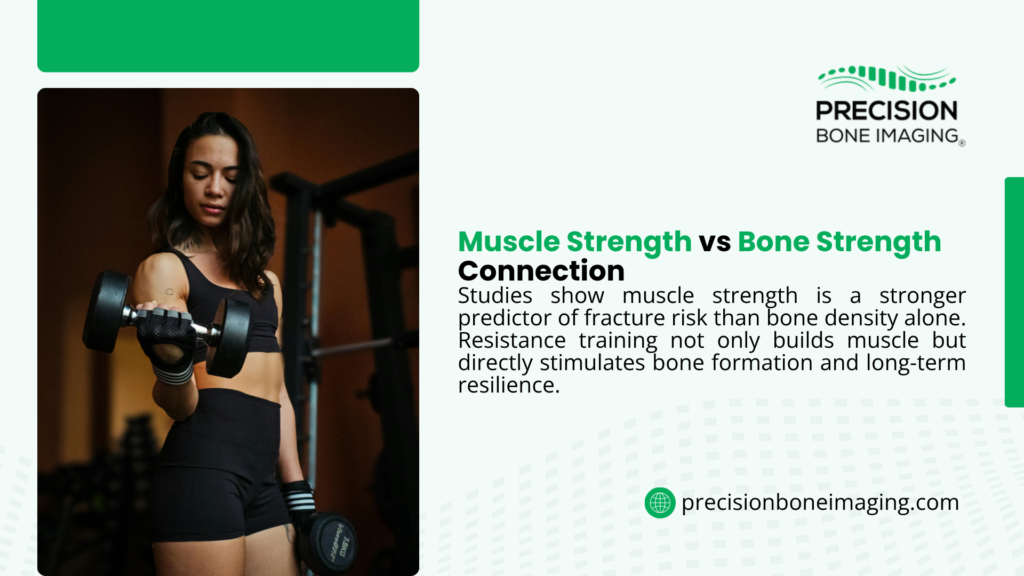
A T-score measures bone density relative to a young adult reference. Fracture risk accounts for additional variables — bone quality, age, fall history, and body composition. REMS provides both density and quality data, offering a more complete fracture risk picture than density alone.