
Alcohol and bone density long term are connected most clearly when alcohol intake is high or continues for many years. Chronic heavy drinking can interfere with bone formation, nutrient use, hormonal balance, and fall prevention, increasing the likelihood of weaker bones and fractures.
Because individual risk also depends on age, sex, hormonal stage, nutrition, activity, and family history, an appropriate bone-health baseline can provide more useful information than symptoms alone.
54 million American adults have osteoporosis and low bone density (osteopenia), and most have no idea until a fracture happens. Could long-term alcohol consumption be silently contributing to that risk?
Long-term alcohol use can affect the balance between bone formation and bone breakdown, particularly when intake is consistently high. The relationship is not governed by one universal threshold, however. Drinking pattern, duration, nutrition, hormonal health, fall risk, and other personal factors all influence the eventual effect on bone.
Bones are living tissue that constantly remodel themselves, and alcohol interferes with that cycle at a cellular and hormonal level. The effect is not immediate. It builds slowly, which is why most people never connect the dots until a scan or a fracture forces the issue.
This article walks through what happens inside bone tissue during sustained alcohol use, why risk depends heavily on dose rather than existing as a fixed rule, and what the evidence says about recovery once intake changes.
Alcohol and Bone Density Long Term: What It Means for Your Bone Health and Longevity
What does long-term alcohol impact on bone density actually mean for your strength, mobility, and independence as you age?
Bone density refers to how much mineral content is packed into a given area of bone. Bone quality is broader. It includes characteristics such as microarchitecture, remodeling, mineralization, and accumulated microscopic damage, all of which can influence how bone responds to stress.
Two people with similar density findings may not have identical fracture risk because density is only one part of skeletal strength. Alcohol may affect this wider picture through changes in remodeling, nutrition, hormones, muscle function, and the likelihood of falling.
Bones behave as metabolic and hormonal tissue, playing a direct role in how well someone ages overall, and strong bones support mobility, confidence, and physical independence that most people take for granted until it starts to slip.
That framing matters here, because alcohol-related skeletal changes rarely announce themselves early. Bone loss can progress for years, quietly, before density testing or a fracture reveals what was already underway.
| Measurement | What It Shows | Why It Matters |
| Bone density | Mineral content in a specific area of bone | One component of overall fracture risk |
| Characteristics associated with bone quality | Information related to structure, remodeling, and skeletal resilience | Helps explain why density alone does not account for every fracture |
| Fracture-risk estimate | The probability of experiencing a fracture within a defined period | Connects skeletal findings with meaningful real-world risk |
Understanding how to increase bone density starts with recognizing that density is not the only factor determining whether your bones hold up over time.
How Alcohol Affects Bone Remodeling Over Time
Why does alcohol affect bones even in someone who feels healthy, active, and shows no obvious symptoms?
The answer sits inside a process called bone remodeling, which never actually stops. Two cell types drive it:
- Osteoblasts, which build new bone tissue.
- Osteoclasts, which break down old or damaged bone so it can be replaced.
In a healthy adult, these processes stay roughly balanced. Formation keeps pace with breakdown, and bone mass holds steady over time.
Chronic heavy alcohol exposure can disturb this coordination. Research consistently identifies impaired osteoblast activity as an important mechanism, but alcohol’s effects are more complex than suppressing formation alone.
Depending on the amount consumed, nutritional status, and duration of exposure, alcohol may also influence resorption, hormone signaling, and the characteristics of newly formed bone.
Alcohol can affect bone remodeling through several interconnected pathways:
- Osteoblast suppression:
Alcohol can reduce osteoblast activity and development, leaving less new tissue available to replace bone removed during normal remodeling.
- Disrupted remodeling:
Sustained heavy intake may alter the rate and coordination of bone turnover, potentially affecting bone maintenance and skeletal resilience over time.
- Hormonal effects:
Alcohol can interfere with hormones involved in bone remodeling, including estrogen, testosterone, and other regulatory pathways.
- Nutritional disruption:
Heavy alcohol use may contribute to inadequate food intake and interfere with the absorption, metabolism, or utilization of nutrients important for bone, including calcium, vitamin D, magnesium, and protein.
- Oxidative stress:
Long-term alcohol exposure can increase oxidative stress and inflammation, which may impair osteoblast function and influence osteoclast activity.
- Falls and muscle function:
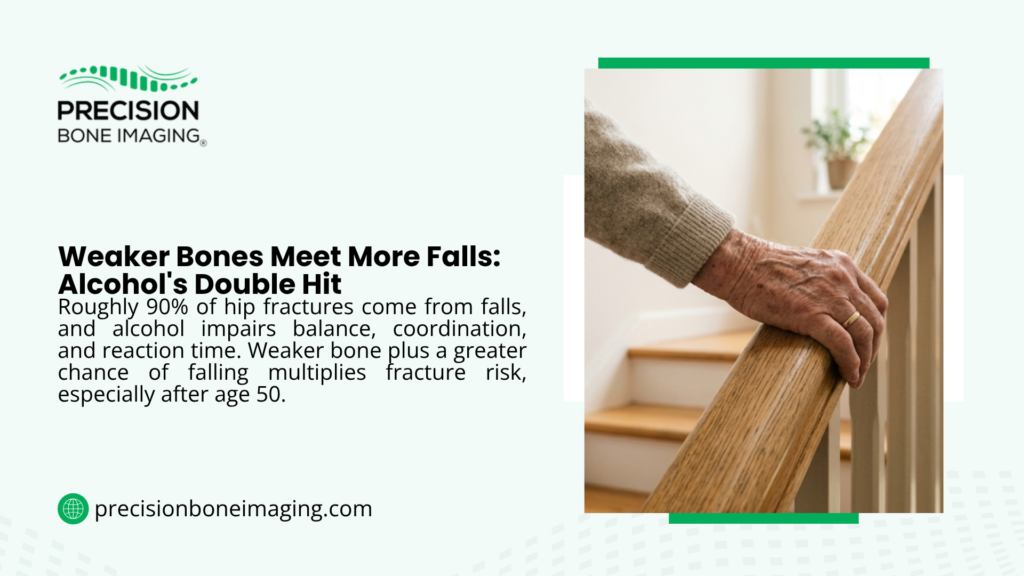
Alcohol can also increase fracture risk indirectly by affecting balance, coordination, reaction time, and muscle health. This means fracture risk may rise for reasons beyond bone density alone.
Bone-Cell Response to Long-Term Alcohol Exposure
Changes in bone formation can begin before they cause noticeable symptoms. If the remodeling cycle remains tilted away from effective repair, the difference between bone removed and bone replaced can accumulate over time.
Because this process usually causes no pain, people may not realize their skeletal health has changed without an appropriate assessment.
| Remodeling Pattern | Bone Formation | Bone Breakdown | Possible Net Effect |
| Normal remodeling | Keeps pace with resorption | Coordinated with formation | Stable bone mass |
| Alcohol-influenced remodeling | May be suppressed | May continue normally or become dysregulated | Gradual loss of bone mass and resilience |
Alcohol-related nutritional deficiencies can intensify this problem. Even when remodeling cells are functioning, the body still needs adequate protein, minerals, and vitamins to build and mineralize new tissue.
Why Bone Quality Matters Alongside Bone Density
Density tells an important part of the story, but it does not explain every fracture.
PBI’s REMS assessment provides bone mineral density findings together with a Fragility Score related to skeletal fragility and characteristics associated with bone quality. It also provides five-year estimates for hip and major osteoporotic fracture risk.
For someone with a history of sustained alcohol use, considering density, skeletal fragility, and other risk factors together may provide more useful context than relying on a density number alone.
Does Alcohol Reduce Bone Density Over the Long Term?
Research supports a clear connection between heavy alcohol consumption and higher fracture risk, but findings at lower levels are more complicated.
A 2022 dose-response meta-analysis found that three standard drinks per day were associated with a 33% higher hip-fracture risk (RR 1.33), while four daily drinks were associated with a 59% higher risk (RR 1.59), compared with no alcohol consumption. The same analysis found that the relationship between lower intake, BMD and fracture risk remained uncertain.
A newer systematic review found that total fracture risk rose by approximately 6% for each additional 14 grams of alcohol consumed per day, the amount in one U.S. standard drink. However, observational studies of osteoporotic and hip fractures have produced mixed results at low intake levels.
These findings do not establish that light or moderate drinking strengthens bones. Some observational studies have reported higher BMD or lower hip-fracture risk among people with low alcohol intake, but differences in drinking patterns, health status and other lifestyle factors may influence those associations.
Higher BMD observed in some groups of light drinkers should therefore not be treated as evidence that alcohol protects bones or should be consumed for bone health. Current evidence is considerably clearer about the risks of sustained heavy drinking than it is about any supposed benefit at lower intake levels.
| Alcohol Pattern | Evidence-Based Bone-Health Interpretation |
| Low intake | Findings are mixed; a protective bone effect has not been established |
| Three standard drinks daily | Associated with progressively higher hip-fracture risk in dose-response research |
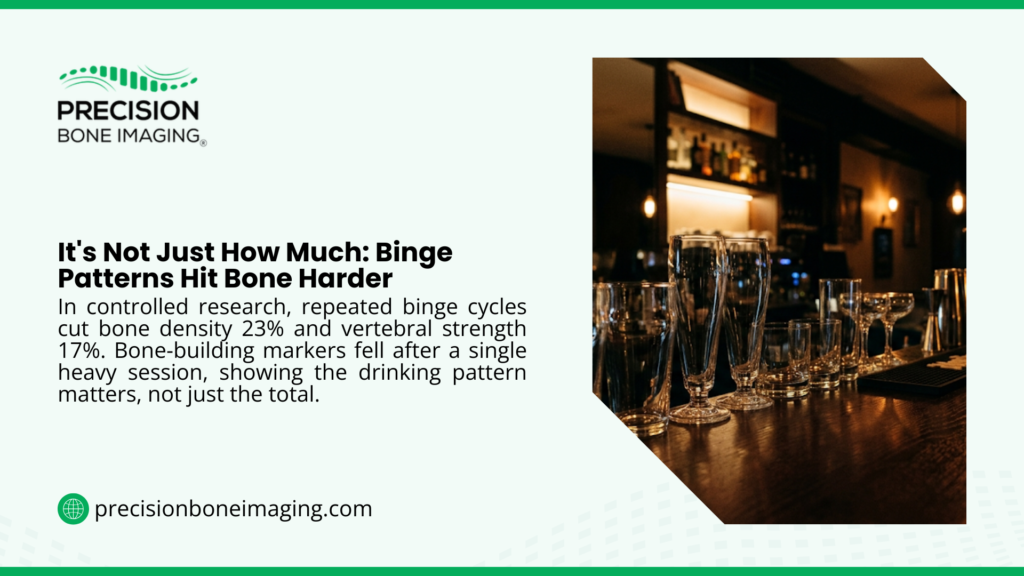
| Long-term heavy or binge drinking | Associated with disrupted remodeling and risks involving nutrition, falls and fractures |
Drink sizes also matter. In the United States, one standard drink contains approximately 14 grams of pure alcohol, about 12 ounces of regular beer, 5 ounces of wine or 1.5 ounces of distilled spirits. A large glass or generous mixed drink may contain more than one standard drink.
Silent Bone Loss: Why Skeletal Changes May Go Unnoticed
Why does bone loss progress silently for years without producing any symptoms a person would notice on their own?
This silence is arguably the most overlooked part of alcohol and long-term bone density risk, and it explains why so many people are caught off guard.
Bone loss produces no pain, no visible change, and nothing that would prompt someone to seek an assessment before a problem develops. A fracture, when it eventually happens, is often the first visible signal that something had been building beneath the surface for years.
The Timeline of Bone Changes Over Time
- Early stage: Remodeling, nutritional or hormonal changes may begin without noticeable symptoms.
- Middle stage: The cumulative imbalance may gradually affect density, skeletal resilience, or both.
- Later stage: Fracture risk may become more substantial, particularly when declining bone strength is combined with falls, reduced muscle function, or other risk factors.
Awareness can change this trajectory. Someone who understands how to prevent osteoporosis has an opportunity to address modifiable risks and establish a baseline before a fracture occurs.
Who Is More Likely to Experience Bone Density Changes From Long-Term Alcohol Use?
Certain groups face a meaningfully higher risk of alcohol-related bone density changes than others:
- Women Entering Perimenopause
Bone loss can begin accelerating during perimenopause as estrogen levels fluctuate and decline. The rate may remain elevated during the early postmenopausal years.
Estrogen helps regulate the balance between old bone being removed and new bone being formed. As this protection declines, sustained heavy alcohol use can add another potential source of remodeling, nutritional and hormonal disruption.
Women do not need to wait until menopause is complete to pay attention to bone health. Perimenopause can be an important time to establish a baseline, while women with additional risk factors may benefit from starting earlier.
- People who reached a lower peak bone mass:
Peak bone mass is generally reached around age 30 and acts as a skeletal reserve for later life. Genetics, nutrition, hormones, physical activity, and health conditions all influence the amount of bone accumulated by that point.
Someone who begins adulthood with a smaller reserve may have less capacity to absorb additional losses associated with aging, hormonal changes, or long-term heavy drinking.
- Long-term heavy drinkers, regardless of age:
Duration matters as much as current intake, sometimes more. Someone drinking heavily for fifteen years carries a different risk profile than someone who just started, even if their current daily intake looks identical on paper.
Over time, impaired formation, inadequate nutrition, hormonal disruption, reduced muscle health, and repeated falls may combine rather than acting as separate risks.
- People with a family history of osteoporosis:
Genetic predisposition sets a baseline for how strong someone’s bones are likely to be and how quickly they may decline with age.
When alcohol-related suppression of bone formation is layered on top of that baseline, the combined effect can move someone toward measurable bone loss faster than either factor would alone. This makes family history a relevant piece of context even for people who drink only moderately.
- Older adults with reduced physical activity:
Movement itself sends a mechanical signal that tells the body to maintain or build bone density, so less active people lose one of their few remaining tools for offsetting other risk factors.
Combine that with alcohol’s effect on suppressing new bone formation, and there is little left working in the body’s favor, since neither movement nor cellular repair are pulling in the right direction.
Age and Bone Strength Over Time
Bone mass generally peaks around age 30. Gradual decline can begin afterward, while specific risk factors, particularly perimenopause, prolonged inactivity, undernutrition, and heavy alcohol use, may accelerate the process.
| Risk Factor | Why It May Amplify Long-Term Decline |
| Perimenopause and menopause | Estrogen changes can shift remodeling toward faster loss |
| Low body weight | May be associated with lower peak bone-mass reserves |
| Sedentary lifestyle | Reduces mechanical stimulus for bone maintenance |
| Family history | May indicate inherited susceptibility to lower density or fractures |
| Heavy long-term alcohol use | Can impair formation, nutrition, hormones, balance and skeletal repair |
Lifestyle Factors That Can Support Bone Health
Reducing heavy alcohol intake is only one part of protecting long-term skeletal health. Other relevant strategies include adequate nutrition, targeted skeletal loading, fall prevention and appropriate progress monitoring.
| Strategy | Potential Bone-Health Benefit |
| Reducing heavy alcohol consumption | Reduces exposure to a modifiable contributor to remodeling disruption, falls and fractures |
| Osteogenic Loading | Provides a targeted, high-force skeletal stimulus designed to support bone adaptation |
| Appropriate impact and resistance-based exercise | Supports muscle, balance and site-specific loading when appropriate for the individual |
| Adequate protein, calcium, vitamin D, magnesium and vitamin K2 | Provides nutritional support for the bone matrix and mineralization |
| Regular bone-health assessment | Establishes a baseline and supports appropriate progress tracking |
PBI’s Bone Health Blueprint uses a protein target of approximately 0.8–1.0 grams per pound of ideal body weight, although individual needs may differ based on health status and professional guidance.
Anyone with low bone density, a previous fracture, or significant balance concerns should obtain suitable guidance before beginning high-force or high-impact activity.
A Proactive Approach to Assessment and Monitoring
How can someone understand their bone health before a fracture occurs?
For people concerned about the long-term effects of alcohol on bone density, education can identify relevant risks, while an assessment provides a measurable starting point.
REMS uses non-ionizing ultrasound to assess the lumbar spine and proximal femurs. It provides BMD findings, T-scores and Z-scores, along with a Fragility Score related to skeletal fragility and characteristics associated with bone quality. The report also includes five-year estimates for hip and major osteoporotic fracture risk.
REMS may also be less influenced by certain degenerative artifacts that can complicate DXA readings. However, no technology is unaffected by every condition, and previous fractures, surgery, or implanted hardware should always be disclosed before an assessment.
When to Consider a Baseline
PBI’s proactive approach recommends considering a bone-health baseline at the following stages:
| Group | When a Baseline May Be Valuable |
| Women | During perimenopause, or earlier when risk factors are present |
| Men | In their 50s, or earlier when risk factors are present |
| Adults around age 30 | Around age 30, when a peak-bone-mass baseline may be valuable |
| People with prolonged heavy alcohol exposure | Earlier when alcohol use is combined with fractures, undernutrition, low body weight, hormonal concerns or family history |
For people with low bone density or osteoporosis, REMS reassessment every six to 12 months may help track changes over time while an exercise, nutritional, hormonal, or clinician-led strategy is underway. The appropriate schedule should reflect individual findings and professional guidance.
Key Insights on Alcohol and Bone Density Long Term
Here is what matters most for understanding this relationship as a whole:
- Sustained heavy alcohol use can suppress bone formation and disrupt other processes involved in skeletal health.
- Bone density is important, but characteristics associated with bone quality also contribute to fracture risk.
- Alcohol-related risk depends on quantity, duration, drinking pattern and other health factors; low intake should not be presented as protective.
- Bone mass generally peaks around age 30, while women may experience accelerated loss beginning during perimenopause.
- Osteogenic Loading, suitable exercise, adequate nutrition and reduced alcohol intake can form part of a broader bone-health strategy.
- Early awareness and appropriate monitoring create more opportunity to act before a fracture occurs.
Frequently Asked Questions
Does alcohol affect bone density over the long term?
Yes. Sustained heavy alcohol use can impair bone formation, disrupt nutrition and hormones, increase fall risk, and contribute to fractures. The relationship at lower intake levels is less certain and varies across studies.
Does alcohol affect bone quality as well as bone density?
Heavy alcohol exposure may affect remodeling, microarchitecture and the characteristics of newly formed bone. Bone density remains important, but it does not account for every fracture. REMS provides BMD findings alongside a Fragility Score related to skeletal fragility and characteristics associated with bone quality.
Can bone health improve after reducing heavy alcohol consumption?
Bone remains metabolically active throughout life, so reducing heavy alcohol intake may create better conditions for bone maintenance and remodeling. The amount of improvement varies according to age, hormonal health, nutrition, activity, previous alcohol exposure, and starting bone status.
Is wine better for bones than beer or distilled spirits?
No type of alcoholic drink has been proven to strengthen or protect bones. Total alcohol intake and drinking pattern matter more than whether the alcohol comes from wine, beer or spirits. Observational findings involving wine should not be treated as a reason to begin drinking for bone health.
Can alcohol increase fracture risk even when bone density is normal?
Yes. Fractures depend on more than density alone. Alcohol may also affect balance, coordination, reaction time and muscle function, increasing the likelihood of a fall even when a density result is not notably low.
Should someone who drinks regularly consider a bone-health assessment?
Regular alcohol use alone does not determine whether an assessment is needed. However, establishing a baseline may be valuable when prolonged heavy intake occurs alongside fractures, undernutrition, low body weight, hormonal changes, family history, or other bone-health concerns. Women should also consider a baseline during perimenopause, while men may consider one in their 50s, or earlier when additional risks are present.
Take the Next Step Toward Bone Health Clarity
Understanding alcohol and bone density long term risk is one part of a much larger picture, and real clarity starts with knowing where things stand today rather than guessing based on how you feel.
Precision Bone Imaging has completed thousands of radiation-free bone-health assessments through locations, partner facilities, and mobile events across multiple U.S. communities.
Every assessment is performed by certified, medically trained sonographers using FDA-cleared Echolight REMS technology.
Here is what that means for you, depending on where you are in your bone health journey. We provide:
- Radiation-free, instant scans that deliver same-day results without any of the exposure risk tied to traditional DXA testing
- Deeper diagnostic insight through REMS technology, assessing both bone density and bone quality in a single session rather than density alone
- A five-point demographic accuracy check at every scan, backed by devices under full manufacturer maintenance with monthly calibration
- Instant printed and digital results paired with expert explanation, so you leave with guidance, not just numbers to interpret alone
- Empowered preventive care built around your actual risk profile, whether that means establishing a first baseline or tracking changes every 6 to 12 months
Book your radiation-free health assessment today and take a clearer first step toward protecting your strength, mobility and independence.
This assessment is for informational purposes only and does not replace medical care.