
More than 54 million Americans have low bone density, and importantly, this number only reflects those whose condition has been identified.
Getting clarity about bone density scan costs and insurance coverage removes uncertainty and makes it easy to take the first step toward lifelong bone health.
This guide breaks down everything you need to know about bone density scan cost and insurance, from typical pricing ranges to Medicare coverage rules.
You’ll learn how to verify your benefits, avoid surprise bills, and find the most accurate assessment options available today.
What Is a Bone Density Assessment and Why Does It Matter?
A bone density assessment evaluates the strength of your skeleton. Traditional scans measure bone mineral density (BMD), which tells you how much calcium and other minerals exist in a specific area of bone. Higher density usually means stronger bones with lower fracture risk.
But density alone doesn’t tell the whole story. Bone quality matters just as much as quantity.
Think of it like a bridge: you need both strong materials (quality) and enough of them (density) to support weight safely.
Traditional DXA vs REMS Technology Comparison
| Feature | Traditional DXA Scan | REMS Ultrasound Technology |
| Radiation Exposure | Yes, low-dose X-ray | None, uses ultrasound waves |
| What It Measures | Bone density only | Bone density + quality |
| Assessment Time | 10-30 minutes | 5-10 minutes |
| Affected by Arthritis/Implants | Yes, can skew results | No, accurate regardless |
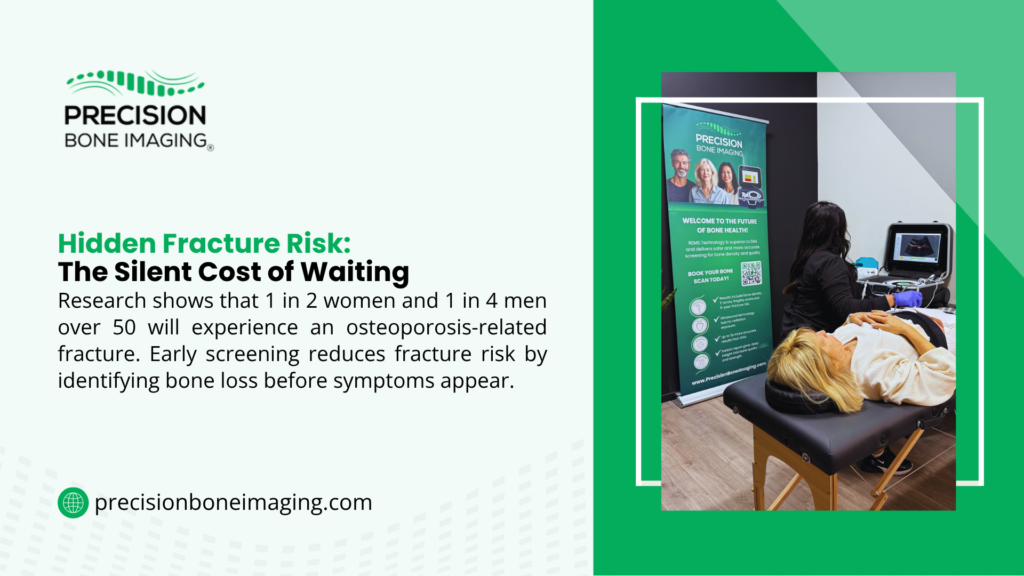
Newer technology like REMS uses ultrasound waves instead of radiation to assess both bone density and quality. This radiation-free approach works well for people who need frequent monitoring or want to avoid repeated radiation exposure.
The assessment gives you clarity about your current bone strength and helps you catch problems early. Many people have low bone density (called osteopenia) or full osteoporosis without any symptoms at all.
From a clinical standpoint, catching bone loss early allows you to build strength, protect mobility, and maintain the active lifestyle you value. This is through simple, proven changes in nutrition, exercise, and habits.
Simple changes in nutrition, exercise, and lifestyle can make a measurable difference when you start early enough.
Average Cost of Bone Density Scans
How much will you pay for your bone assessment? Costs vary widely based on scan type, facility location, and whether you have insurance coverage.
Without insurance, most people pay between $150 and $400 for a bone density assessment. The final price depends on several factors we’ll explore below.
Average Cost by Facility Type
| Facility Type | Typical Price Range | Wait Time | Notes |
| Hospital Radiology | $300-$500 | 1-3 weeks | Higher overhead costs |
| Independent Imaging Center | $200-$350 | 1-2 weeks | Mid-range pricing |
| Specialty Bone Health Clinic | $200-$400 | Same week | Often uses newer technology |
| Mobile Screening Event | $150-$250 | Same day | Limited follow-up support |
With insurance, your out-of-pocket costs usually range from $0 to $100, depending on your deductible, copay, and whether you’ve met your annual deductible.
Cost Differences by Location
Geographic location affects pricing significantly. Assessments in major metro areas like Los Angeles or Phoenix often cost more than in smaller cities due to higher overhead and operating costs.
Cost by Scan Type
The technology used for your assessment affects the final price. Traditional scans remain the most common option and usually cost less upfront, but newer radiation-free options offer benefits that may justify slightly higher costs for some people.
For people who need frequent monitoring, radiation-free options make more sense long-term. You can safely get assessments every six to twelve months without worrying about cumulative radiation exposure.
How Insurance Covers Bone Density Scans
Will your insurance cover your assessment? Here’s what most people miss when checking coverage.
Insurance coverage for bone density assessments varies widely based on your plan type, age, risk factors, and how often you’ve had previous scans. The key is knowing what questions to ask before you book your appointment.
Medicare Coverage Rules
Medicare Part B covers bone density assessments for eligible beneficiaries once every two years. You qualify for coverage if you meet any of these criteria:
- You’re a woman age 65 or older
- You have osteoporosis confirmed by X-ray
- You’re taking medications that cause bone loss (like prednisone)
- You have primary hyperparathyroidism
- You’re receiving long-term dialysis
- You have a vertebral fracture or family history of fractures
Medicare typically pays the full cost of approved assessments when performed at an in-network facility. You won’t pay a copay or deductible for this preventive service if your doctor orders it as medically necessary.
Medicare Coverage Quick Reference
| Coverage Element | Details |
| Frequency | Once every 24 months |
| Beneficiary Cost | $0 if criteria met |
| Age Requirement | 65+ for routine screening |
| Pre-authorization | Usually not required |
| In-Network Requirement | Yes, for full coverage |
The important detail many people miss is the two-year spacing requirement. If you get an assessment before the two-year mark, Medicare might deny coverage and you’ll pay the full cost yourself.
Private Insurance Coverage Details
Private insurance plans vary significantly in their coverage policies. Most plans cover bone density assessments for people meeting certain risk criteria, but the specifics differ by carrier and plan type.
Common coverage triggers for private insurance include:
- Age 50 or older for women, 60 or older for men
- Early menopause (before age 45)
- Long-term use of steroids or other bone-affecting medications
- Chronic conditions that affect bone health
- Previous fracture from minor trauma
- Family history of osteoporosis
Many plans require pre-authorization before they’ll cover your assessment. This means your doctor needs to submit paperwork explaining why you need the scan before you actually get it.
If you skip this step, you might end up paying the full cost even if you would have qualified for coverage.
How to Verify Coverage Before Booking
| Step | Action | Why It Matters |
| 1 | Call your insurance customer service | Confirm if assessments are covered |
| 2 | Ask about frequency limits | Avoid denials for timing issues |
| 3 | Verify if pre-authorization is needed | Required by some plans |
| 4 | Check if the facility is in-network | Out-of-network costs much more |
| 5 | Confirm your current deductible status | Know your actual out-of-pocket cost |
Take notes during your call and ask for a reference number. Insurance representatives sometimes give incorrect information, and having documentation helps if you need to dispute a bill later.
A note about newer radiation-free technology: some insurance plans haven’t updated their coverage policies to include REMS assessments yet.
This doesn’t mean you can’t get one, but it might mean paying out of pocket. Always verify coverage for the specific technology your provider uses.
Factors That Affect Your Bone Scan Cost
Your final bill depends on more than just the assessment itself. Several factors combine to determine what you’ll actually pay.
Location and Facility Type
Hospital-based radiology departments typically charge the most because of their higher overhead costs. Independent imaging centers often offer better pricing while maintaining quality standards.
Specialty bone health clinics may charge mid-range prices but offer advantages like newer technology and more focused expertise.
Assessment Technology Used
The type of technology your provider uses affects both the cost and the information you receive. Traditional methods measure density only, while newer ultrasound-based approaches evaluate both density and quality.
From our experience with diagnostic content, many people choose radiation-free options even at slightly higher costs because they value the comprehensive information and safety profile.
This decision makes particular sense for people who need frequent monitoring or anyone concerned about radiation exposure.
Additional Testing and Follow-Up
Some providers include only the basic assessment in their quoted price. Others bundle in consultation time, detailed result explanations, or follow-up recommendations.
Ask what’s included before you book.
For example, a $200 assessment with a comprehensive results consultation and action plan often provides better value than a $150 scan with no guidance on next steps.
Deductibles and Coinsurance
Even with insurance coverage, you might pay significant amounts if you haven’t met your annual deductible yet.
After meeting your deductible, you typically pay coinsurance (a percentage of the cost) until you hit your out-of-pocket maximum.
For instance, with an 80/20 plan, insurance pays 80% and you pay 20% of the assessment cost.
Sample Out-of-Pocket Scenarios
| Scenario | Assessment Cost | Insurance Pays | You Pay | Notes |
| Deductible not met | $300 | $0 | $300 | You pay full amount |
| Deductible met, 80/20 plan | $300 | $240 | $60 | You pay 20% |
| Medicare-qualified | $300 | $300 | $0 | Fully covered |
| Out-of-network | $300 | $100 | $200+ | Much higher cost |
Cost-Saving Strategies for Bone Health Assessments
You can reduce your out-of-pocket costs through several practical approaches.
Use HSA or FSA Funds
Health Savings Accounts (HSAs) and Flexible Spending Accounts (FSAs) allow you to pay for qualified medical expenses with pre-tax dollars. Bone density assessments qualify as eligible expenses under most plans.
Using HSA or FSA funds effectively gives you a discount equal to your tax rate.
Choose In-Network Providers
In-network facilities have negotiated rates with your insurance company, resulting in much lower costs than out-of-network options. The difference can be substantial, sometimes hundreds of dollars for the same service.
Before booking, ask if the facility is in your insurance network. Don’t assume that because a doctor is in-network, their affiliated imaging center will be too.
Ask About Cash-Pay Discounts
Many facilities offer lower prices if you pay cash upfront rather than billing insurance. This strategy works best if you have a high-deductible plan or no coverage at all.
Check for Promotions and Special Offers
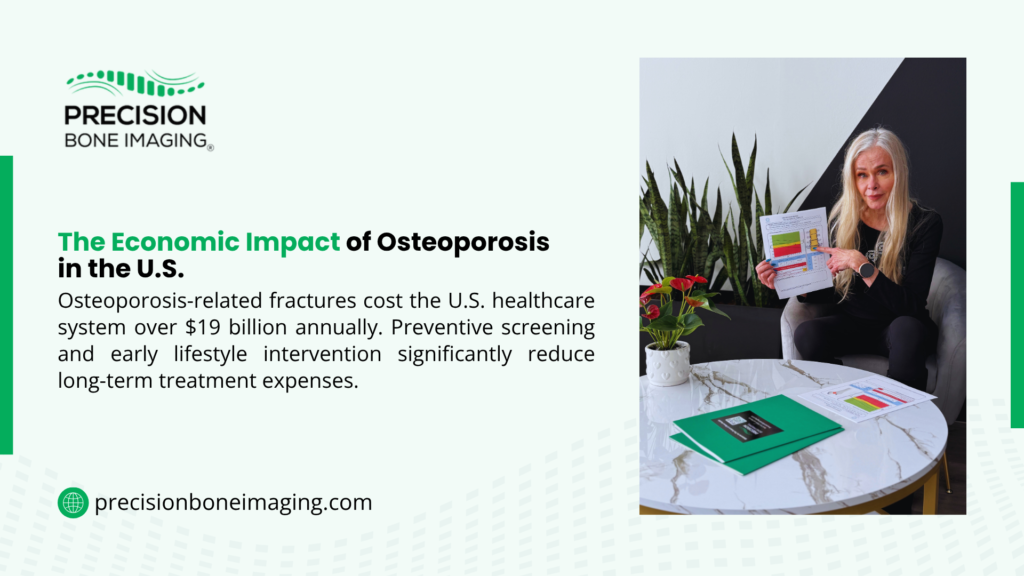
When booking a self-pay REMS scan with a provider like Precision Bone Imaging, it’s worth checking if they’re currently running any promotions or seasonal discounts.
Many bone health centers offer:
- First-time assessment discounts
- Seasonal promotions for bone health awareness months
- Package pricing for baseline + follow-up scans
- Referral discounts
Joining their mailing list is often the best way to stay informed about upcoming offers. You’ll receive notifications about special pricing, educational events, and new assessment options as they become available.
Before booking at standard pricing, take a moment to check the provider’s website or contact them directly to ask about current promotions. A simple question could save you a meaningful amount on your assessment.
Time Your Assessment Strategically
If you’re close to meeting your annual deductible, waiting a few weeks for other medical expenses to hit might mean your assessment costs significantly less.
Conversely, if it’s late in the year and you’ve already met your deductible, getting your assessment before January 1st means you’ll pay less than if you wait until the new year when your deductible resets.

What Your Assessment Results Mean
Your assessment provides valuable insights that translate into actionable next steps for bone health.
Results typically show your bone density as a T-score, which compares your bones to those of a healthy 30-year-old adult. A T-score of -1.0 or higher means normal bone density.
Scores between -1.0 and -2.5 indicate low bone density (osteopenia). Scores of -2.5 or lower meet the criteria for osteoporosis.
But remember that density tells only part of the story. Bone quality, measured by newer technology, helps predict fracture risk more accurately than density alone.
After your assessment, you’ll receive guidance on next steps based on your findings. This might include:
- Specific exercises to build bone strength
- Supplements to support bone health
- Follow-up assessments to track progress
Many people ask about foods to prevent osteoporosis, and nutrition plays a crucial role in maintaining bone strength throughout life. The right combination of nutrients gives your body what it needs to maintain and build bone tissue.
Exercise matters tremendously too. Weight-bearing and resistance activities signal your body to maintain bone strength. If you’re looking for targeted approaches, exercises to increase bone density in the spine can make a measurable difference over time.
Recommended Follow-Up Timeline
| Initial Finding | Suggested Follow-Up |
| Normal bone density | Repeat in 2-5 years |
| Low bone density (osteopenia) | Repeat in 1-2 years |
| Osteoporosis | Repeat in 6-12 months |
The goal is tracking progress over time to see if your prevention efforts are working. When you know how to increase bone density through lifestyle changes, following up regularly shows you whether those changes are making a difference.
Frequently Asked Questions
How much does a bone density scan cost without insurance?
Costs typically range from $150 to $400 depending on the facility type and technology used. Specialty clinics with newer radiation-free technology may charge toward the higher end, while basic traditional assessments at imaging centers often cost less.
How do I avoid surprise out-of-pocket costs?
Confirm that your provider is in-network before booking, verify whether your plan requires pre-authorization, understand your current deductible status, and ask for a cost estimate in writing. Taking these steps prevents most billing surprises.
Are radiation-free REMS scans covered by insurance?
Coverage varies by insurance carrier and plan. As of now, most insurance plans do not yet cover REMS technology for bone density assessments.
However, coverage policies are evolving, so it’s worth verifying with your specific insurer whether they cover radiation-free ultrasound-based bone scans before your appointment.
Can men get covered for bone density scans?
Yes, men qualify for coverage when they meet risk criteria such as age over 60, long-term steroid use, previous fractures, or chronic conditions affecting bone health. Coverage rules apply similarly to both men and women when medical necessity is established.
How often should I get a bone density scan?
Follow-up frequency depends on your initial findings and risk factors. People with normal bone density might wait several years between assessments, while those with low bone density or osteoporosis benefit from annual or semi-annual monitoring to track changes over time.
What is the difference between bone density and bone quality?
Density measures how much mineral content exists in your bones, like counting bricks in a wall. Quality assesses the structure and architecture of bone tissue, like evaluating how those bricks are arranged and connected. Both matter for fracture risk, and newer technology measures both factors simultaneously.
Take Control of Your Bone Health Today
Now you know what to expect for bone density scan cost and insurance coverage. The assessment itself costs less than most people fear, especially with insurance, and the insights you gain are worth far more than the price.
Now that you understand the costs and coverage options, you can move forward with confidence and clarity.
A simple assessment gives you the clarity you need to protect your mobility, strength, and independence for decades to come.
The earlier you establish your baseline bone health, the more options you have for prevention. Catching bone loss early gives you the most options and the best outcomes. Simple lifestyle changes work most powerfully when you start from a position of strength.
If you’re curious about whether osteoporosis runs in your family, understanding your genetic risk can help you decide how urgently to focus on preventing osteoporosis.
Similarly, if you want to learn more about the dexa vs rems radiation differences, knowing your options helps you make informed decisions about which technology fits your needs best.
Your Next Step: Book Your Radiation-Free Bone Health Assessment
Precision Bone Imaging offers advanced REMS technology that provides instant results and detailed bone quality assessment without any radiation exposure. Our approach gives you comprehensive insights about both bone density and quality in a single comfortable appointment.
We serve more than 49 areas, offering convenient locations and flexible appointment times. Our team specializes in bone health assessments and provides clear, actionable guidance based on your findings.
Thousands of people have already taken the first step toward lifelong strength with our radiation-free assessments. Book your appointment today and gain the clarity, confidence, and insights you need to protect your bone health for life.