
Yes, a family history of hip fractures can increase your future fracture risk, even after bone mineral density is considered. It does not mean you will experience the same outcome, but it is a meaningful reason to establish a bone-health baseline earlier and monitor other risk factors.
This article explains what that history means, which other factors shape your personal risk, and how proactive bone health assessment can provide clarity before a fracture occurs.
How Does a Family History of Hip Fractures Affect Bone Health Risk?
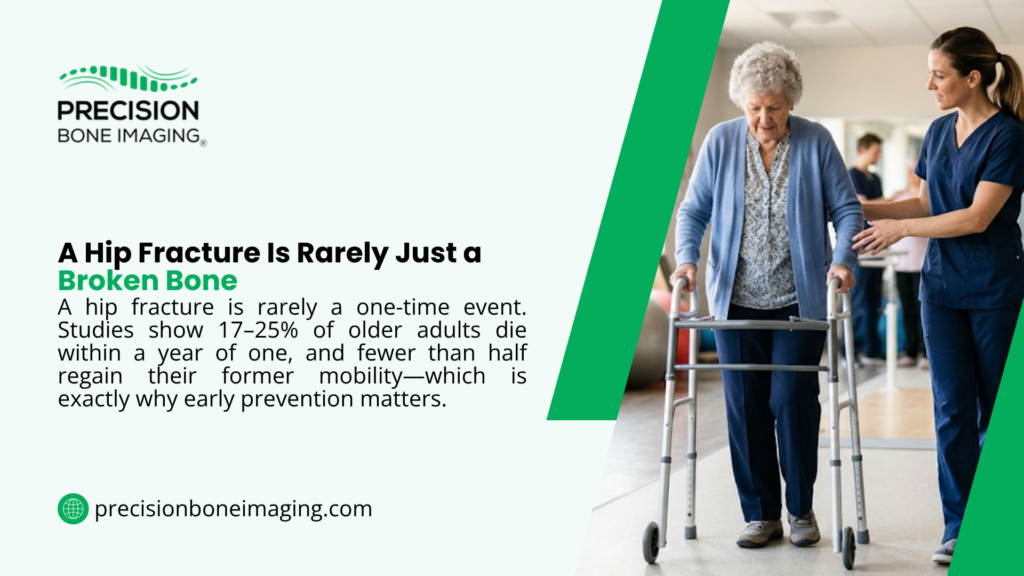
A family history of hip fractures is one of the most consistently recognized risk factors in clinical bone health assessment.
A parent’s hip fracture carries real clinical significance. The inherited component behind this pattern, sometimes called genetic osteoporosis, plays a direct role in how peak bone mass develops and how quickly bone loss can accelerate with age.
Twin studies have documented that genetic factors account for up to 80% of normal variation in bone mineral density.
A separate longitudinal study confirmed that genetics explain 44 to 56% of variation in bone loss among postmenopausal women.
These figures explain why clinicians give a family history of hip fractures a specific place in fracture risk evaluation.
| Risk Factor | Modifiable | Potential Impact |
| Family history of hip fractures | No | Associated with higher future fracture risk in both women and men |
| Age | No | Risk rises significantly after age 50 |
| Perimenopause and menopause | No | Hormonal changes can accelerate bone loss, often beginning during the menopausal transition |
| Physical activity | Yes | Reduces fall and fracture risk |
| Calcium and vitamin D | Yes | Supports bone mineral density |
| Smoking | Yes | Accelerates bone resorption |
| Previous fractures | No (past event) | Strongest predictor of future fracture |
A large 2025 meta-analysis involving 350,542 men and women found that a parental history of hip fracture was associated with a 37% higher risk of hip fracture and a 19% higher risk of a major osteoporotic fracture. The relationship remained significant after researchers accounted for bone mineral density, showing that family history can provide risk information beyond BMD alone.
What Counts as a Family History of Hip Fractures?
Not every family connection carries the same clinical weight. The clearest signal comes from a parent with a documented hip fracture, particularly one from a minor fall rather than a high-impact event.
Additional history worth noting includes:
- A sibling with a hip fracture or early-onset osteoporosis assessment
- Multiple relatives with fragility fractures from low-impact events
- A parent with a formal osteoporosis assessment in their 50s or 60s
Hip fractures often reflect systemic bone fragility rather than a single isolated injury. That distinction is precisely what gives a parent’s hip fracture its clinical weight in risk assessment.
What Family Fracture Details Should You Collect?
The circumstances surrounding a relative’s fracture can provide more useful context than simply knowing that a fracture occurred. Before speaking with your healthcare provider, collect as many of the following details as possible.
| Information to Record | Why It Matters |
| Which relative experienced the fracture? | A parent’s hip-fracture history has established relevance in fracture-risk assessment |
| How old were they? | A fracture at a younger age may deserve closer attention |
| What caused the fracture? | A fracture after a minor fall may indicate underlying skeletal fragility |
| Was osteoporosis identified? | This provides additional context about the relative’s bone health |
| Have other relatives experienced fragility fractures? | Several fractures within a family may indicate a broader pattern |
| Were bone-affecting medications involved? | This helps identify whether medication use may have contributed to the fracture |
Bring these details to your next healthcare visit. A clearer family history can support a more informed conversation about your personal risk factors and whether establishing a bone-health baseline earlier may be appropriate.
Why Family History Is Only One Piece of the Bone Health Puzzle
Two people with the same family history of hip fractures can have very different bone health outcomes. Genetics set a starting point. Daily choices, hormonal transitions, nutrition, and physical activity shape where things go from there.
Because most people reach peak bone mass by early adulthood, with some skeletal sites continuing to develop until around age 30, this stage can provide a useful opportunity to document a personal baseline, particularly when osteoporosis or hip fractures run in the family.
Bone mineral density is also only part of the story. Bone quality reflects characteristics of bone tissue that also contribute to skeletal strength and fracture resistance. This is one reason density alone may not provide the complete picture.
Modern bone health assessment now addresses both measures in one session.
| Factor | Why It Matters | Practical Examples |
| Strength training | Stimulates bone formation | Resistance exercise, loaded movements |
| Osteogenic loading | Applies brief, controlled forces intended to stimulate an adaptive skeletal response | Supervised osteogenic loading sessions |
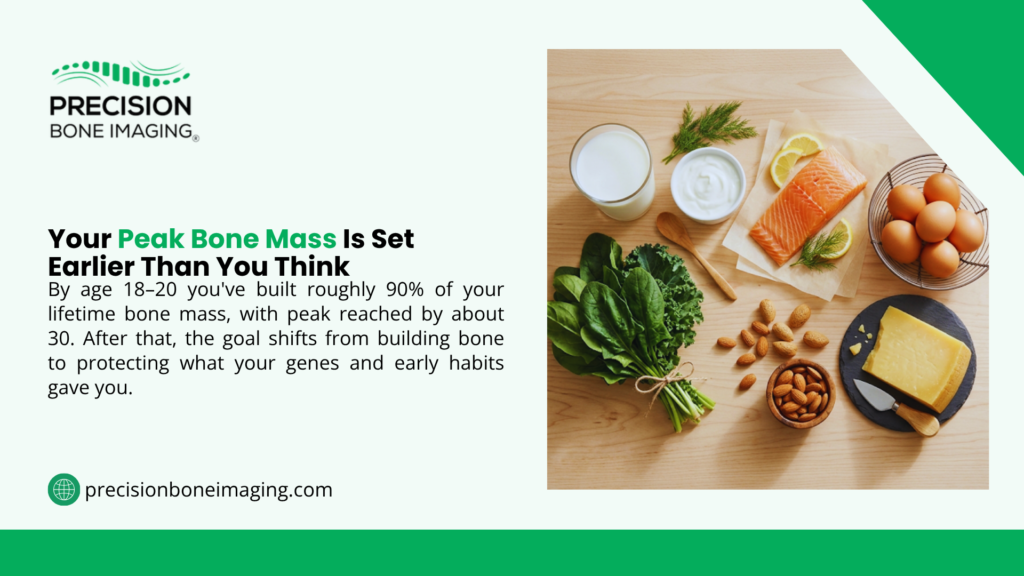
| Calcium intake | Primary mineral for bone tissue | Dairy, leafy greens, fortified foods |
| Vitamin D | Enables calcium absorption | Fatty fish, eggs, sunlight |
| Hormone status | Estrogen supports bone remodeling | Perimenopause is an important window because bone loss may begin accelerating before menopause is complete |
| Body weight | Low BMI linked to lower bone mass | Underweight is a recognized risk factor |
| Smoking | Accelerates bone resorption | Any cigarette use raises risk |
Can You Have Healthy Bones Even with a Family History of Hip Fractures?
Yes, a family history of hip fractures raises awareness of risk, not the certainty of fracture. People with a parent who fractured a hip can still build and maintain strong bones through consistent habits and early assessment.
From a clinical standpoint, the strongest outcomes come from those who act before bone loss reaches a level where options narrow. Acting earlier can provide more opportunity to identify risks, strengthen supportive habits, and establish a useful baseline before a fracture occurs.
When Should Someone with a Family History Get a Bone Health Assessment?
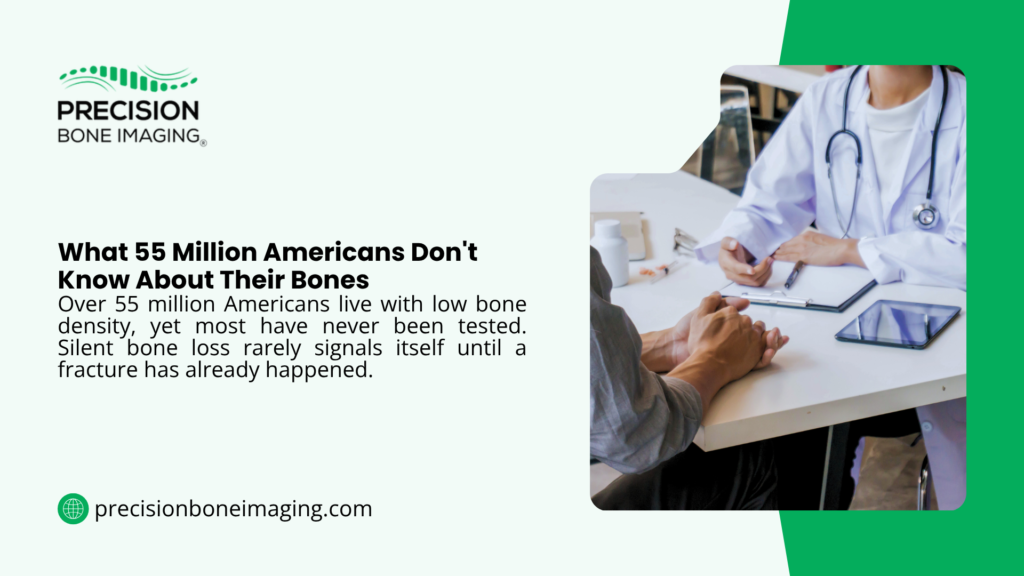
Bone loss produces no visible symptoms in its early stages. For adults with a family history of hip fractures, or other recognized risk factors, this makes proactive awareness especially relevant.
A bone density test gives clinicians a baseline measurement of mineral content at the hip and spine. When paired with bone quality data, it tells a more complete story about current fracture risk and long-term trends.
| Situation | Why It Matters | Next Step to Consider |
| Parent experienced a hip fracture | Documented hereditary risk factor | Discuss bone health assessment with a clinician |
| Approaching or experiencing perimenopause | Hormonal changes can accelerate bone loss during this transition | Consider establishing a baseline during perimenopause, or earlier when family history or other risk factors are present |
| Man in his 50s | Bone loss can progress without noticeable symptoms, and family history may increase concern | Consider a first baseline assessment in the 50s, or earlier when family history or other risk factors are present |
| Previous fracture from minor impact | Strong predictor of future fracture | Prompt assessment is appropriate |
| Low body weight or low BMI | Independent risk factor for low bone mass | Discuss assessment timing |
| Family history of osteoporosis | Elevated hereditary risk | Earlier assessment than standard age |
Modern radiation-free bone health assessments provide insights into both bone density and bone quality. Adults gain a clearer picture of where they stand today, along with a measurable baseline to track over time.
What Can a Bone Health Assessment Reveal About Inherited Risk?
A bone health assessment is about having the right information to act before problems develop. Findings can reveal whether bone density falls within an expected range, whether bone quality warrants closer attention, and how future assessments could be timed.
Precision Bone Imaging uses radiation-free REMS technology to assess bone mineral density and bone quality at the hips and lumbar spine. The report also includes a Fragility Score and five-year fracture-risk information, providing a broader baseline that can be tracked over time and discussed with a healthcare provider.
PBI pairs these findings with clear education to help clients understand the report and prepare useful questions for their healthcare providers.
This assessment is for informational purposes only and does not replace medical care.
Practical Ways to Support Strong Bones for Life
A family history of hip fractures is one factor you cannot change. What you do with that knowledge is a different matter entirely.
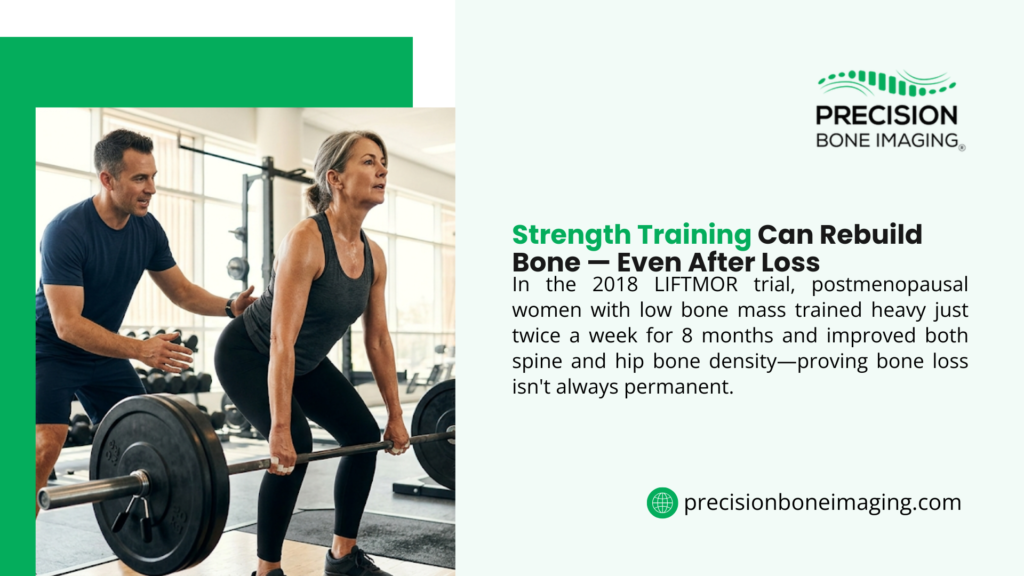
The right lifestyle changes to overcome genetic risk for osteoporosis address nutrition, resistance exercise, weight-bearing movement, osteogenic loading, and regular assessment together, rather than treating each one in isolation.
| Habit | Bone Health Benefit | Frequency |
| Resistance exercise | Stimulates bone formation | 2 to 3 times per week |
| Weight-bearing movement | Applies mechanical load to the skeleton | Most days |
| Osteogenic Loading | Uses brief, controlled, high-intensity loading to encourage the bones to adapt to mechanical demand | Often performed in a short supervised session once per week, depending on the program and individual suitability |
| Calcium-rich foods | Supplies primary bone mineral | Daily |
| Vitamin D support | Enables calcium absorption | Daily |
| Reduce alcohol | Lowers bone resorption risk | Moderate consistently |
| Quit or reduce smoking | Slows bone loss | As early as possible |
| Adequate protein intake | Supports bone matrix, muscle strength, and physical function | Daily, based on individual needs and professional guidance |
Osteogenic loading complements resistance and weight-bearing exercise; it should not be presented as a substitute for a broader movement program. People with fractures, significant pain, or medical restrictions should discuss suitable loading activities with a qualified healthcare professional.
A Simple Bone Health Checklist for Adults with a Family History of Hip Fractures
A structured starting point makes prevention feel more practical:
- Stay active with regular weight-bearing movement and resistance exercise.
- Consider whether professionally supervised osteogenic loading is appropriate for your current health, mobility, and fracture history.
- Support calcium and vitamin D intake through food and supplementation when appropriate.
- Note any medications, especially corticosteroids, that may affect bone health.
- Bring family fracture history to your next clinical visit.
- Women should consider establishing a baseline during perimenopause, or earlier when family history or other risk factors are present.
- Consider a bone health assessment to establish a baseline and track change over time.
FAQs About Family History of Hip Fractures
Does a parent’s hip fracture increase my risk?
Yes. Having a parent who experienced a hip fracture can increase your own fracture risk, although it does not mean you will inevitably have the same outcome. Inherited characteristics can influence peak bone mass, bone structure, and how bone health changes with age. This family history is a meaningful reason to discuss earlier assessment, establish a baseline, and monitor other risk factors with your healthcare provider.
Can osteoporosis run in families?
Yes, studies show that genetic factors account for up to 80% of variation in bone mineral density. An inherited tendency toward lower bone mass can be influenced by lifestyle choices, but it remains a real and measurable part of individual risk.
Should I pay attention to bone health if I have no symptoms?
Bone loss is often silent until a fracture occurs. Millions of Americans have osteoporosis or low bone mass, and bone loss often develops without noticeable symptoms.
What other factors increase fracture risk?
An early or accelerated menopausal transition, low body weight, long-term corticosteroid use, cigarette use, low calcium or vitamin D, and prior adult fractures from low-impact events all raise risk alongside family history.
Is family history enough reason to learn more about my bone health?
A parent’s hip fracture is one of the most consistently recognized risk factors in osteoporosis assessment guidelines. Family history alone warrants a clinical conversation, and when other risk factors are also present, it makes a clear case for earlier assessment. For women, that conversation can begin during perimenopause rather than being delayed until after menopause.
Take the First Step Toward Clarity
A parent’s hip fracture is information worth acting on. It does not determine your future, but it gives you a clear reason to take proactive steps early, when those steps carry the most impact.
Precision Bone Imaging provides radiation-free REMS bone health assessments across locations and scheduled events in California, Arizona, Colorado, and a growing number of U.S. communities. Each session delivers same-day findings on both bone density and bone quality, with clear education to help clients understand their findings and prepare informed questions for their healthcare providers.
A REMS assessment at Precision Bone Imaging provides:
- Zero radiation exposure, making it suitable for proactive assessment and ongoing monitoring.
- Bone density and bone quality assessed in one session.
- Same-day results with clear, easy-to-understand findings.
- Technology designed to reduce the influence of artifacts that can complicate traditional bone-density measurements.
Book your radiation-free bone health assessment today. Know your strength. Protect your future.
This assessment is for informational purposes only and does not replace medical care.