
- Fracture risk rises gradually with age, but the process is largely preventable
- Bone strength, muscle function, and fall exposure are the three factors that matter most
- Nutrition and resistance exercise each play a distinct, necessary role
- A clear bone health baseline gives you the foundation to act with purpose
Knowing how to reduce fracture risk as you age is one of the most practical health decisions you can make, yet the advice most people receive is incomplete.
This guide gives you a clear, structured framework and what role a bone health assessment plays in how to reduce fracture risk as you age.
By the end, you will know what drives fracture risk, how to address each factor, and what role a bone health assessment plays in the process.
Why Fracture Risk Increases as You Age
Understanding these changes is the first step in knowing how to reduce fracture risk as you age with any real precision.
According to the Bone Health and Osteoporosis Foundation, more than 54 million Americans live with low bone density or osteoporosis, and 1 in 2 women over 50 will experience a fracture in their lifetime. Those numbers reflect a serious gap in prevention, not an inevitable outcome.
Bone is a living tissue. It constantly breaks down and rebuilds. After your early 30s, bone breakdown begins to outpace renewal, and the gap widens each decade.
This is not purely a density problem. Three overlapping changes push fracture risk higher over time, and most prevention content addresses only one of them.
| Factor | What Changes | Impact on Fracture Risk |
| Bone mass | Gradual mineral loss from the spine and hip | Greater chance of fracture from low-impact events |
| Muscle strength | Loss of fast-twitch fibers (sarcopenia) | Less capacity to prevent or absorb a fall |
| Coordination | Slower nerve and balance response | More frequent stumbles |
| Hormones | Estrogen and testosterone decline | Faster bone turnover, especially post-menopause |
| Bone quality | Structural changes at the microscopic level | Weaker bone despite normal density on a scan |
Bone Strength Changes More Than You Realize
Bone strength has two components: density and quality. Density reflects how much mineral is present. Quality reflects the structural integrity of the bone tissue itself.
Most standard assessments measure density alone. Two people with identical density scores can carry very different fracture risks based on bone quality. Knowing both gives a genuinely complete picture.
This distinction matters enormously when mapping out how to reduce fracture risk as you age, addressing density alone leaves half the picture unexamined.
Adults who want to get ahead of this process can start with how to prevent osteoporosis as a foundational resource, covering the full spectrum of risk factors before problems arise.
Muscle and Balance Become Critical
Muscle acts as the body’s primary shock absorber. Strong legs, hips, and a stable core help the body respond to a stumble before it becomes a fall. When muscle mass declines, so does that protective response time.
Sarcopenia, the gradual loss of muscle with age, begins earlier than most people expect. Research published in the Journal of Cachexia, Sarcopenia and Muscle shows measurable decline starts in the fourth decade of life.
Falls Are More Likely And More Consequential
The CDC reports that falls cause approximately 95% of hip fractures in older adults. That single figure captures how central fall prevention is to any bone health strategy.
As bone quality and muscle strength decline together, the consequences of a fall become more severe. A stumble that caused a bruise at 40 can cause a fracture at 70. Cutting fall exposure is as important as any supplement or exercise routine.
The 3 Factors That Actually Determine Fracture Risk
Fracture risk is not one problem. It is three problems layered on top of each other: bone strength, muscle and balance, and fall exposure. Address only one and the others remain active threats.
| Factor | Why It Matters | What Improves It |
| Bone strength | The structural base of fracture resistance | Resistance exercise, calcium, vitamin D, protein |
| Muscle and balance | The body’s first line of defense against falls | Strength work, balance drills, consistent movement |
| Fall exposure | The frequency and severity of fall situations | Home safety, footwear, habit changes |
Bone Strength (Your Foundation for Longevity)
Bone responds to load. When mechanical stress is applied to bone tissue, the body interprets it as a signal to maintain and reinforce its structure. Without that signal, the body has no reason to prioritize bone preservation.
This is why weight-bearing and resistance exercise are the most direct tools for bone strength. The relationship is well-established in the scientific literature and remains active throughout life.
Muscle and Balance (Your Built-In Protection System)
Think of muscle and balance as an active safety system. When both are strong, the body can respond to a stumble in fractions of a second, often before you are even consciously aware of it.
Proprioception, the body’s internal sense of position and movement, is trainable. Simple balance drills done consistently improve the reflexes that prevent falls, independent of bone strength itself.
Fall Risk (Your Environment and Habits)
Environmental factors account for a significant share of fall events. Loose rugs, poor lighting, slippery bathroom surfaces, and worn footwear all create conditions where a fall becomes likely.
These changes take no medical expertise, only awareness and a brief audit of your home and daily habits. This is one of the fastest, most direct ways to reduce fracture risk as you age.
How to Strengthen Your Bones the Right Way
Bone strength improves through consistent, targeted inputs. Nutrition provides the raw material. Exercise provides the stimulus. Lifestyle habits either support or undermine both.
| Strategy | Level of Evidence | Notes |
| Resistance exercise | Strong | Directly stimulates bone remodeling at the spine and hip |
| Weight-bearing cardio | Strong | Supports density through mechanical load |
| Calcium and vitamin D together | Strong | Each works better in the presence of the other |
| Calcium supplements alone | Moderate | Limited effect without vitamin D and exercise |
| Low-activity lifestyle | Negative | Removes the mechanical stimulus bone needs |
Nutrition That Supports Strong Bones
Calcium is the mineral most associated with bone health, but it does not work without support. Vitamin D is required for calcium absorption at the gut level.
Protein forms the structural matrix that bone mineral attaches to. Without adequate protein, even good calcium intake produces limited results.
Key targets for adults 40 and above:
- Calcium: 1,000 to 1,200 mg daily from food and supplementation
- Vitamin D: 800 to 2,000 IU daily, with blood levels ideally between 40 and 60 ng/mL
- Protein: At least 0.8 to 1.0 grams per kilogram of body weight per day
- Magnesium and K2: Both support calcium metabolism and proper mineral placement in bone
Food sources come first. Supplements close nutritional gaps but do not replace a varied, nutrient-dense diet. For a deeper look at dietary and lifestyle strategies, visit how to increase bone density.
The Most Effective Exercises for Bone Strength
The exercises with the strongest evidence for bone health place direct mechanical load on the spine and hip.
Resistance exercises:
- Squats and leg presses
- Deadlift variations (Romanian, trap bar)
- Loaded carries
- Rows and pull variations for upper-body bone stimulus
Research on what exercises increase bone density in the spine consistently points to compound lower-body and hip hinge movements as the most effective options. These are safe with proper form and appropriate progression.
Habits That Slowly Weaken Bones
Some daily patterns work against bone health without any obvious connection to bones:
- Inactivity: Removes the mechanical stimulus that bone needs to maintain density
- Smoking: Directly reduces bone mineral density and slows bone repair
- High alcohol intake: More than two drinks per day is associated with reduced bone formation
- Chronic stress: Elevated cortisol over time accelerates unfavorable bone turnover
- Very low caloric intake: Deprives bone tissue of the nutrients it needs to rebuild
Eliminating even two or three of these patterns meaningfully shifts the trajectory of how to reduce fracture risk as you age over the long term.
Each of these is modifiable. Small, consistent changes in these areas compound significantly over months and years.
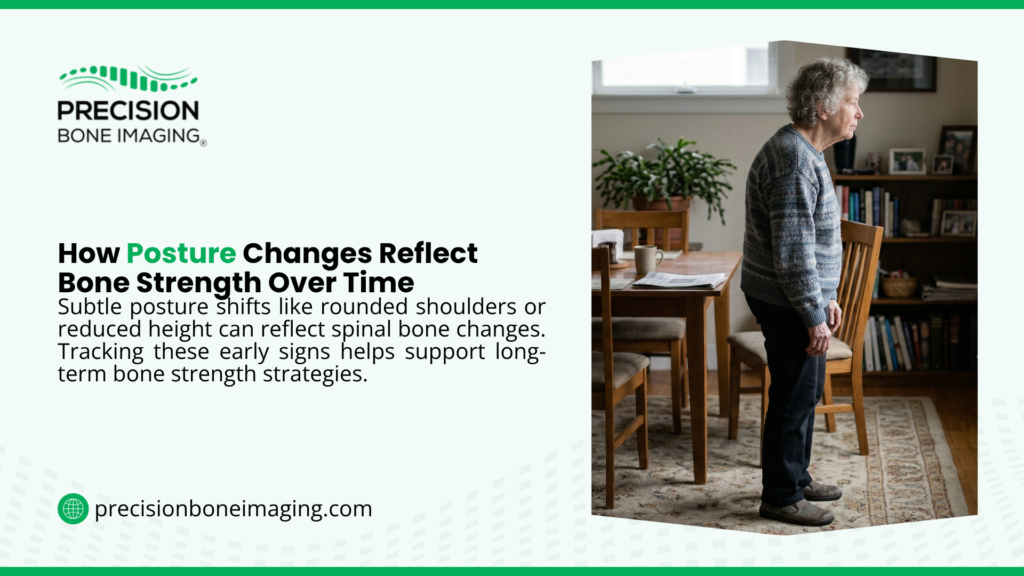
How to Improve Balance and Reduce Fall Risk
Balance and bone strength address different parts of the same problem. Strong bones can still fracture when falls happen frequently. A comprehensive approach to fracture prevention has to include both.
| Habit | Why It Helps | Where to Start |
| Single-leg balance drills | Builds proprioception and ankle control | 30 seconds per leg, twice daily |
| Hip and glute work | Improves gait and lateral stability | Glute bridges, side-lying leg raises |
| Home safety audit | Removes common trip hazards | Check rugs, lighting, and bathroom surfaces |
| Consistent footwear review | Worn soles and poor fit raise slip risk | Replace shoes when grip fades |
| Medication review | Some drugs cause dizziness or low blood pressure | Discuss annually with your provider |
Simple Balance Exercises You Can Start Today
No gym or equipment is needed for effective balance work. These three drills are practical and evidence-backed:
- Single-leg stance: Stand on one foot for 30 seconds. Switch legs. Progress to eyes closed when comfortable.
- Heel-to-toe walk: Place each foot directly in front of the other, moving in a straight line.
- Side-to-side weight shift: Stand with feet hip-width apart and slowly move your body weight from one foot to the other.
Two to three short sessions per day produces better results than one long session per week.
Strength Work for Stability
Hip and leg strength are the most direct predictors of fall resistance. Weak hips reduce the body’s ability to catch a stumble and absorb impact on uneven ground.
Practical exercises that build this stability include glute bridges, wall sits, step-ups, and seated leg presses. None of these require heavy weights to produce meaningful results.
For adults over 60, a targeted plan that covers both strength and balance can be found in how to increase bone density after 60.
Make Your Environment Safer
Environmental modifications are one of the most underrated tools for how to reduce fracture risk as you age, and they require no equipment or expertise.
A home audit takes less than an hour. The impact on fall risk can be significant.
Practical changes to prioritize:
- Secure or remove loose rugs on hard floors
- Add grab bars in the shower, near the toilet, and at stairwells
- Improve lighting in hallways, stairways, and bedrooms
- Clear pathways of cords, clutter, and low furniture
- Wear supportive footwear indoors rather than socks on smooth surfaces
The Missing Step Most People Overlook: Know Your Bone Health
Nutrition and exercise are foundational. But without a clear baseline, you work without objective data. You do not know whether your current approach applies to your actual situation, whether your bones are already at risk, or how much progress you have made over time.
Most adults over 40 have never had a bone health assessment. That gap is exactly where preventable fractures occur.
| Age / Situation | Why It Matters | What to Look For |
| Women 40 to 50 | Perimenopause begins; estrogen starts to decline | Baseline density and quality |
| Men 50 to 60 | Testosterone decline affects bone turnover | A starting point for comparison |
| Women 60+ | USPSTF recommends assessment for all women in this group | Full bone strength evaluation |
| Any adult post-fracture | Suggests possible undetected bone weakness | Immediate assessment and next steps |
| Adults on long-term steroids | Medications accelerate bone loss | Annual or biennial assessment |
| Family history of osteoporosis | Genetic risk elevates personal baseline | Earlier start, shorter follow-up intervals |
Why Early Insight Builds Confidence
Adults who assess early have time to adjust nutrition, exercise, and supplementation before the situation becomes urgent. They also have a baseline to compare against, which turns each follow-up into measurable progress rather than guesswork.
What Traditional Approaches Often Miss
Standard bone assessments typically measure density alone. That gives you part of the picture. Bone quality, which reflects the structural integrity of the tissue itself, is equally important for an accurate fracture risk evaluation.
Two people with identical density scores can carry meaningfully different risk. When only density is measured, some adults with real, elevated risk go undetected until a fracture occurs.
A More Advanced Way to Know Bone Strength
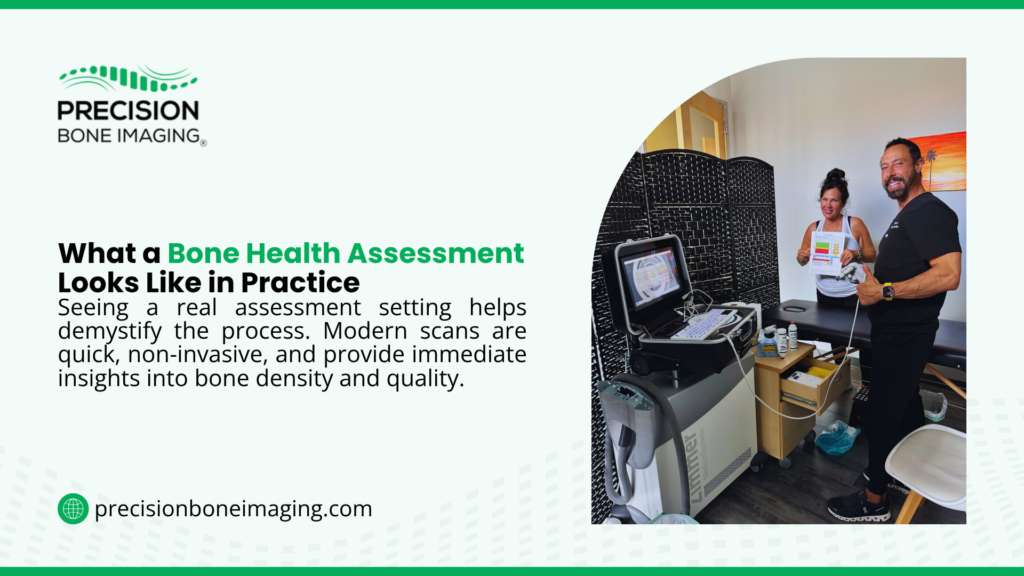
Precision Bone Imaging provides radiation-free REMS (Radiofrequency Echographic Multi-Spectrometry) bone health assessments at clinics in 30+ locations.
REMS technology uses ultrasound rather than X-rays, which means zero radiation. It measures both bone density and bone quality in a single session, with instant results that include a Fragility Score and a 5-year fracture risk estimate.
Results are available the same day, presented in a clear, color-coded format.
Someone who gets a bone health assessment early, acts on the data, and rescans every 6 to 12 months is in the strongest position to reduce fracture risk as you age in a measurable, trackable way.
If you are a woman unsure when the right time is to start, our article on when you should get a bone density test provides clear, evidence-based guidance on timing your first or next assessment.
This assessment is for informational purposes only and does not replace medical care.
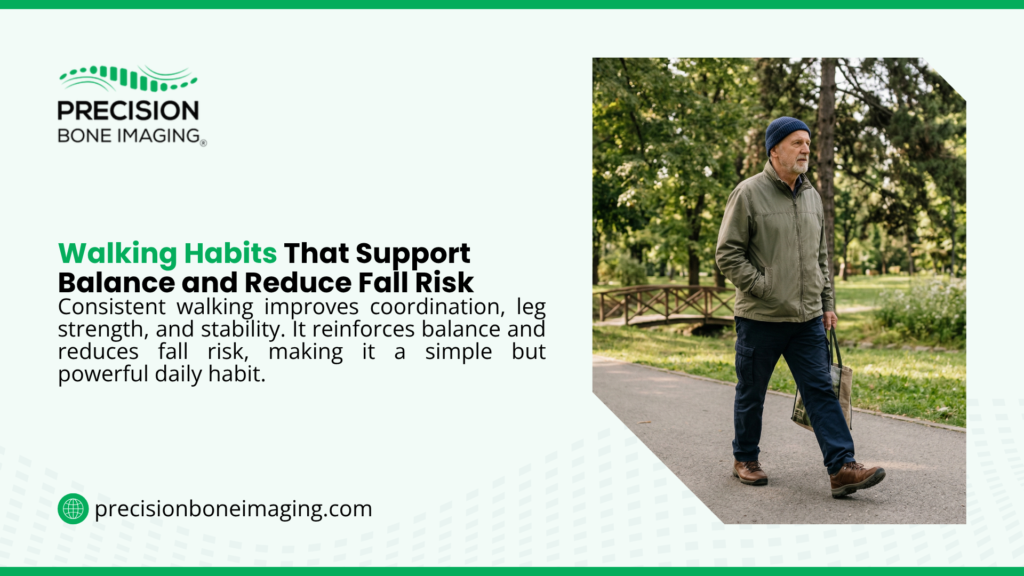
From Insight to Action: A Simple Weekly Plan
A bone health plan does not need to be complex. The most effective routines are consistent, not complicated.
| Day | Activity | Focus |
| Monday | 30-min walk + resistance session | Bone load and muscle strength |
| Tuesday | Balance drills + posture work | Stability and coordination |
| Wednesday | Light walk or active rest | Recovery |
| Thursday | Resistance exercise | Spine and hip strength |
| Friday | Balance drills + outdoor walk | Fall resistance |
| Saturday | Longer walk or hike | Weight-bearing cardio |
| Sunday | Rest or gentle movement | Recovery |
Daily Habits That Make a Difference
Small daily actions compound significantly over time. These are the highest-leverage habits for bone health:
- At least 20 to 30 minutes of weight-bearing movement each day
- Protein at every meal (eggs, fish, legumes, lean meat)
- Brief outdoor exposure for natural vitamin D
- One to two minutes of balance work in the morning
A Weekly Strength and Balance Routine
Two to three resistance sessions per week is the minimum for a meaningful bone response. Each session should include:
- One compound lower-body movement (squat, step-up, leg press)
- One hip hinge movement (deadlift variation, Romanian deadlift)
- One or two upper-body exercises for overall strength support
Balance work added to the start or end of any resistance session takes five minutes and builds the kind of reflexive stability that prevents falls over time.
Track Progress Over Time
“What you measure gets managed.” This applies directly to bone health.
Rescanning every 6 to 12 months while on an active program gives you objective data on whether your approach is working. When progress stalls, you adjust.
When results improve, you have proof the effort is justified. This feedback loop transforms good intentions into measurable results.
Common Mistakes That Raise Fracture Risk as You Age
Even well-motivated adults make avoidable errors. These are the patterns that most consistently undermine bone health efforts.
Knowing how to reduce fracture risk as you age also means knowing which common approaches fall short.
| Mistake | Why It Falls Short | Better Alternative |
| Calcium supplements only | Risk of calcium build up in arteries, instead of bones. | Full nutrition plan and resistance work |
| Avoiding exercise out of fear | Reduces bone load and muscle mass | Start with supervised, low-impact movement |
| Waiting for symptoms | Bone loss is silent until a fracture occurs | Assess early and track over time |
| Skipping protein | Bone matrix is protein-based; deficiency weakens it | Include at least 30g of protein at every meal |
| Ignoring balance | Strong bones still fracture when falls are frequent | Add brief balance work to any routine |
The Supplement Trap
Calcium and vitamin D are valuable inputs, but they are not complete solutions. Without mechanical stimulus from exercise, bone has no signal to maintain density or improve quality.
Supplements fill nutritional gaps. They do not replace the adaptive response that comes from physical load.
Exercise Avoidance Works Against You
Many adults over 60 shy away from exercise out of concern about injury. That concern is understandable, but inactivity accelerates exactly the bone loss and muscle decline that raise injury risk in the first place.
The answer is not high intensity. It is a gradual progression. Start with supervised, low-load movements and build from there. This is safe, effective, and far more protective than inaction.
The Cost of a Wait-and-See Approach
Bone loss has no symptoms. There is no pain, no visible change, no warning until a fracture occurs. By that point, years of preventable decline have already accumulated.
Proactive assessment, before there is any sign of a problem, is the difference between reactive care and genuine prevention. The earlier you know, the more options you have to act on it.
Frequently Asked Questions
What causes fracture risk to increase with age?
Bone density declines gradually after age 30. After menopause, women experience accelerated bone loss due to falling estrogen levels.
Muscle mass also decreases with age, which reduces the body’s ability to prevent and absorb falls.
How can I tell if I am at risk for fractures?
Bone loss has no visible symptoms, which is why a bone health assessment is the only reliable way to know your current status. Key risk factors include age over 50, a family history of osteoporosis, prior fractures, long-term steroid use, low body weight, and smoking.
A REMS bone health assessment provides both density and quality data in a single, radiation-free session, giving you the clearest possible picture of how to reduce fracture risk as you age.
What are the best exercises to strengthen bones safely?
Resistance exercise and weight-bearing activity have the strongest evidence for bone health. Squats, deadlift variations, step-ups, and loaded carries place direct stress on the spine and hip.
Consistency across all three inputs (load, nutrition, and balance) is what drives lasting results when learning how to reduce fracture risk as you age.
Take the Next Step Toward Stronger Bones
Fracture risk builds quietly over years. By the time most people act on it, the window for easy prevention has already narrowed.
The clearest step available to you right now is to know where your bone health stands today.
Precision Bone Imaging provides radiation-free REMS bone health assessments at clinics in Los Angeles, Phoenix, Denver, San Jose, Scottsdale, and Reno — with 30+ additional locations across the US.
Each session delivers instant results on both bone density and bone quality, with clear guidance on what your findings mean and what to do next.
REMS technology is FDA-registered, CE-marked, and validated to offer up to 30% more accurate fracture risk assessment than traditional DXA, with 40% greater sensitivity to changes in bone quality. Zero radiation. Instant results. A clear path forward.
Book your radiation-free bone health assessment today and take the first step toward stronger bones for life.
This assessment is for informational purposes only and does not replace medical care.