
More than 55 million Americans have low bone density, and most find out only after a fracture changes everything. For women, the years after menopause often bring the fastest bone loss of a lifetime.
Bone loss after menopause is one of the fastest and most silent shifts a woman’s body goes through.
Knowing how to slow bone loss naturally after menopause is one of the most direct steps you can take toward protecting long-term mobility, strength, and independence.
This guide breaks down the evidence-based steps to slow bone loss naturally after menopause, from resistance exercise and bone-supportive nutrition to why regular assessment is the piece most women leave out entirely.
Why Bone Loss Accelerates After Menopause
Estrogen plays a central role in bone remodeling. When levels drop sharply at menopause, bone resorption begins to outpace bone formation.
The Bone Health and Osteoporosis Foundation confirms that women can lose up to 20% of their bone density in the five to seven years after menopause.
For a full look at how this hormonal shift affects the skeleton at each stage, see our detailed guide on how menopause affects bone density.
| Factor | Effect on Bone Health |
| Estrogen decline | Accelerates bone resorption |
| Natural aging | Slows new bone formation |
| Sedentary behavior | Reduces mechanical stimulus for bone preservation |
| Low calcium or vitamin D | Limits mineral supply to bone tissue |
A 2026 study published by “The Menopause Society”, found that low femoral bone mineral density can raise mortality risk in postmenopausal women by as much as 47% within specific density ranges.
These numbers make the window for early, natural action clear.
Bone Density vs. Bone Quality: Why Both Matter
Standard bone scans measure the amount of minerals packed into bone tissue. Bone quality is a separate measure entirely.
It captures the internal structural integrity of that tissue. Both determine real-world fracture risk, yet most standard scans only address density.
A 2025 peer-reviewed paper in Bone & Joint confirmed that bone mineral density alone is a poor predictor of fracture risk. Newer assessment technology now captures bone quality data alongside density in a single radiation-free session.
| Measurement | What It Captures |
| Standard bone density | Mineral content at the hip and spine |
| Bone quality | Internal structure and resilience of bone tissue |
| REMS assessment | Both density and quality in one session, zero radiation |
How to Slow Bone Loss Naturally After Menopause: The Steps That Actually Work
These strategies carry the strongest research support for postmenopausal women. Each one targets a specific part of the bone health picture.
- Prioritize Resistance Exercise
Resistance exercise places direct mechanical load on bone and signals the body to preserve and build bone tissue. It is one of the most studied ways to slow bone loss naturally after menopause.
A 2025 meta-analysis in the Journal of Orthopaedic Surgery and Research, drawn from 690 participants, found that resistance exercise significantly improved bone mineral density at both the lumbar spine and femoral neck in postmenopausal women.
Research supports two to three sessions per week at 70 to 80% of one-rep maximum as a practical, effective target for most women over 50.
For a step-by-step framework on the moves with the strongest evidence for spinal bone density, see exercises to increase bone density in the spine.
Beginner-friendly options for women over 50:
- Squats with bodyweight or light resistance
- Modified push-ups against a wall or bench
- Hip hinge movements such as Romanian deadlifts
- Step-ups on a low, stable platform
- Add Weight-Bearing Activity Through the Week
Weight-bearing activity applies mechanical stress to the skeleton and stimulates bone-forming cells directly.
A study of nurses found that those who walked four or more hours per week were 41% less likely to suffer a hip fracture compared to those who walked less than one hour per week.
| Activity | Bone Benefit | Accessibility |
| Brisk walk | Load applied to hips and spine | Very high |
| Stair climb | Provides impact stimulus | High |
| Dance | Load combined with coordination | High |
| Hiking | Weight-bearing on varied terrain | Moderate |
Consistency matters more than intensity. A moderate daily habit produces more cumulative benefit over months than occasional, intense effort.
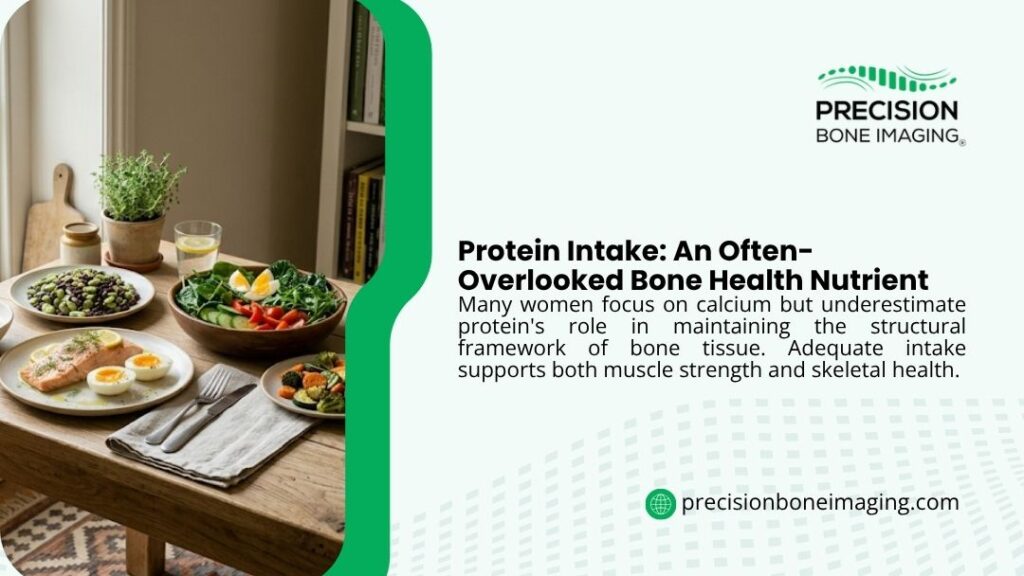
- Build a Bone-Supportive Diet
Bone-supportive nutrition is a core part of any effective plan to slow bone loss naturally after menopause.
A systematic review in MDPI Nutrients, found that combining exercise with calcium and vitamin D supplementation significantly outperformed supplementation alone for bone mineral density at both the lumbar spine and femoral neck.
For a practical, food-by-food breakdown, see foods to prevent osteoporosis.
| Nutrient | Role in Bone Health | Key Food Sources |
| Calcium | Primary mineral in bone tissue | Dairy, leafy greens, fortified foods |
| Vitamin D | Enables calcium absorption | Fatty fish, eggs, sunlight |
| Protein | Forms the structural matrix of bone | Meat, legumes, dairy |
| Magnesium | Activates vitamin D | Nuts, seeds, whole grains |
| Vitamin K | Supports bone protein synthesis | Leafy greens, fermented foods |
- Reduce the Habits That Accelerate Bone Loss
A 2025 StatPearls update confirmed that bone loss is accelerated by cigarette use, excess alcohol, sedentary behavior, and inadequate calcium and vitamin D intake.
Steps to reduce bone-damaging habits:
- Quit or reduce cigarette use as early as possible
- Limit alcohol to moderate amounts
- Break up long periods of seated inactivity during the day
- Verify that daily calcium and vitamin D intake meet age-appropriate targets
Common Mistakes That Can Undermine Bone Health
Many women actively trying to slow bone loss naturally after menopause still see limited progress. A few consistent gaps tend to explain why.
- Relying on Supplements Alone
Supplements support bone health, but they cannot replace the mechanical stimulus that comes from physical activity.
Calcium without load-based exercise has a far more limited impact on bone preservation than most people expect.
- Focusing Only on Calcium
Calcium receives the most attention, but bone health depends on a full nutrient network. Magnesium, vitamin D, vitamin K, and protein each play distinct roles that calcium alone cannot cover.
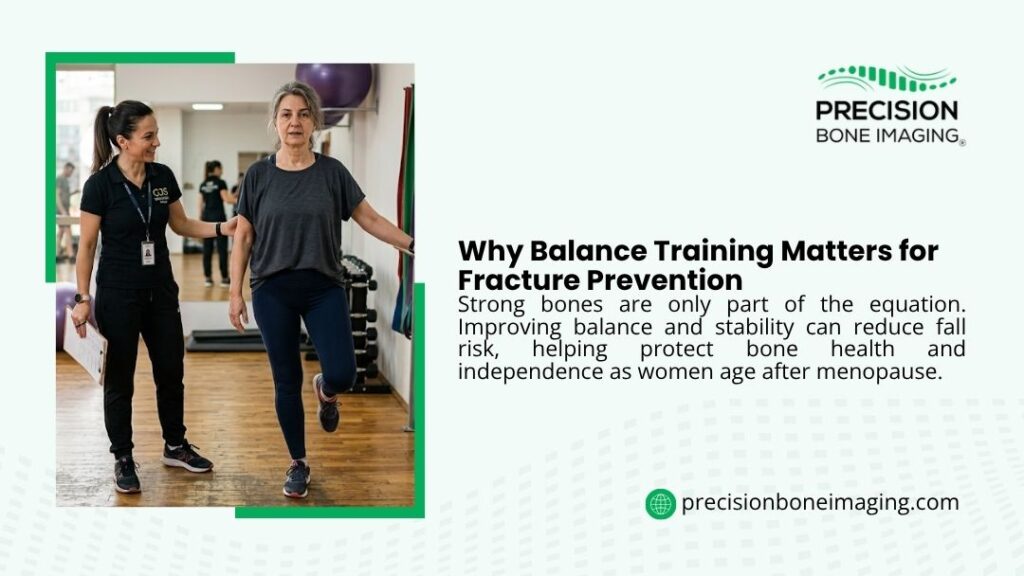
- Ignoring Muscle Strength and Balance
Research shows that women with sarcopenia carry more than double the fracture and fall risk compared to those without it. Muscle and bone are closely connected.
Strong muscles reduce fall risk directly, which is one of the most practical routes to fracture prevention.
- Waiting for Symptoms Before Taking Action
Bone loss produces no pain and no visible changes until a fracture occurs. A 2026 analysis confirmed that nearly 69% of all osteoporosis cases in the United States remain undiagnosed.
Waiting for a signal means the most effective window for natural action has already closed.
| Mistake | Why It Works Against Progress |
| Supplements alone | No mechanical stimulus for bone tissue |
| Calcium only | Misses protein, magnesium, vitamin D, and K |
| Skipping muscle work | Doubles fall and fracture risk |
| Waiting for symptoms | 69% of cases go undetected until fracture |
How to Know If Your Bone Health Plan Is Working
This is the part of any approach to slow bone loss naturally after menopause that most women leave out. Without measurement, there is no reliable way to confirm that consistent effort is producing real results.
Bone tissue responds over months, not days. The principle holds: what you measure gets managed.
Why Ongoing Bone Health Monitoring Matters
Regular assessment provides the clarity to know whether your plan moves results in the right direction. A bone density scan gives you a starting reference point.
Repeat assessment at six to twelve month intervals reveals whether your efforts produce measurable change over time.
From a clinical standpoint, this is the step that converts effort into evidence.
| What to Track | How to Track It |
| Bone density | Periodic bone health assessment |
| Bone quality | REMS-based assessment |
| Strength output | Progressive resistance capacity per session |
| Nutrition consistency | Daily nutrient targets |
When Additional Bone Health Support May Be Helpful
Risk Factors Worth Paying Attention To
Some factors raise personal bone health risk independently of lifestyle. These deserve a closer look:
- Family history of osteoporosis or fractures
- Prior adult fractures
- Early menopause before age 45
- Long-term corticosteroid use
- Low body weight or low BMI
Understanding Your Bone Health Through Assessment
A bone health assessment converts uncertainty into a clear, specific foundation to act from. Rather than a general approach, it gives you a measurable reference point to track progress over time.
The International Osteoporosis Foundation reports that hip fractures carry mortality rates of 20 to 24% in the first year. Of survivors, 40% are unable to walk independently a year later.
Every step you take to slow bone loss after menopause, measured and tracked early, moves the odds in your favor.
Frequently Asked Questions
Can I slow bone loss naturally after menopause without medication?
Consistent resistance exercise, bone-supportive nutrition, and targeted supplementation are each linked to improvements in bone mineral density. The strongest outcomes come when these approaches work together rather than in isolation.
What is the difference between bone density and bone quality?
Bone density measures the mineral content of bone tissue. Bone quality measures the internal structural integrity of that tissue. Both affect real fracture risk. Standard scans measure density only. REMS assessment captures both in a single, radiation-free session.
How long does it take to see results from natural bone health strategies?
Measurable changes in bone mineral density typically take six to twelve months of consistent effort. Strength and energy improvements often appear earlier and serve as useful early indicators.
What is the best exercise to slow bone loss naturally after menopause?
Resistance exercise at progressive loads carries the strongest evidence base. Weight-bearing activities such as brisk walks, stair climbs, and dance add further benefit when combined with resistance work.
How often should bone health be assessed?
Most health professionals suggest assessment every six to twelve months for postmenopausal women, with shorter intervals for those with existing bone loss or multiple risk factors.
What makes REMS different from a standard bone scan?
REMS captures both bone density and bone quality in a single session with zero radiation. Standard scans measure density only. REMS is also unaffected by arthritis, scoliosis, or metal implants, and delivers same-day results.
Strong Bones Are Built One Consistent Choice at a Time
Bone health compounds quietly through years of well-directed effort. No single action does everything. A consistent plan does.
The earlier you act on how to slow bone loss naturally after menopause, the more natural protection remains available to you. Prevention is always easier than recovery. Strong bones support the mobility, confidence, and independence to live on your own terms.
Take the Next Step With Precision Bone Imaging
Precision Bone Imaging provides radiation-free REMS bone health assessments in Los Angeles and Phoenix, with nationwide expansion in 2026.
Every session delivers same-day findings on both bone density and bone quality, with clear guidance on what your results mean and where to focus your efforts next.
REMS technology at Precision Bone Imaging is FDA-registered, CE-marked, and validated to offer:
- Zero radiation exposure, safe for frequent and repeat assessments
- Instant results available the same day
- Complete bone density and quality data in one session
- No interference from arthritis, scoliosis, or metal implants
- Up to 30% more accurate fracture risk assessment than traditional DXA
- 40% greater sensitivity to changes in bone quality
Book your radiation-free bone health assessment today. Know your strength. Protect your future.
This assessment is for informational purposes only and does not replace medical care.