
Bone loss can begin accelerating during perimenopause as fluctuating and declining estrogen disrupts normal bone remodeling. Establishing a baseline during this transition, or earlier when risk factors are present, can help women understand their bone density and quality before greater loss occurs.
Perimenopause and bone loss are more closely linked than most women realize, often beginning years before the menopause transition ends. This article explains the hormonal mechanics behind early bone decline, which risk factors deserve the most attention, and what lifestyle habits and proactive assessments can do to protect long-term bone strength.
What Happens to Your Bones During Perimenopause?
Perimenopause is the phase before menopause. It typically starts in the early-to-mid 40s and can last four to eight years. Estrogen levels do not drop in a clean, steady curve during this phase.
They shift up and down, sometimes sharply. And those hormonal fluctuations directly affect how bones maintain their strength.
To understand how menopause affects bone density, start with the bone renewal cycle. Bones are not static. They constantly break down and rebuild.
Estrogen keeps this cycle in balance. When estrogen declines, the breakdown side outpaces the rebuild side, and bone mass begins to fall.
Because this process is completely silent, most women never notice it until a fracture occurs. There is no pain or any visible changes, but just gradual, progressive loss.
A clear picture of perimenopause and bone loss starts with what estrogen actually does at the cellular level.
Why Estrogen Is Important for Bone Strength
Estrogen regulates two key types of bone cells: osteoclasts, which break down bone tissue, and osteoblasts, which build it.
When estrogen is adequate, osteoclasts stay in check. When estrogen drops, osteoclasts become more active than osteoblasts, and the balance tips.
Research suggests that some women may lose a substantial proportion of their bone density during the years surrounding the final menstrual period, with the most rapid decline occurring during late perimenopause and early postmenopause. That is not a marginal shift.
| Hormonal Change | Potential Effect on Bones |
| Declining estrogen | Faster bone breakdown relative to bone formation |
| Disrupted bone renewal balance | Progressive decline in bone mineral density |
| Age-related muscle loss | Greater fall and fracture risk |
Can Bone Loss Start Before Perimenopause Ends?
Yes, the reality of perimenopause and bone loss is that bone decline often begins during the transition itself, not after it concludes.
In a two-year prospective study of 49 women, 12 participants, 24.3%, lost more than 7% of their bone mineral density and were classified by the researchers as “fast bone losers.”
The rate of bone loss varies by menopause stage, skeletal site and individual risk. Some studies report losses of approximately 1–2% per year during the faster phase of the transition, while a smaller group of women may lose bone more rapidly.
Bone loss during perimenopause is not a future concern. In many cases, it is already in progress.
Why an Earlier Bone-Health Baseline Can Help
Most people reach peak bone mass by approximately age 30, although timing varies by skeletal site and individual development. An assessment around early adulthood can provide useful context about a person’s highest bone-mass range. If that earlier opportunity has passed, perimenopause remains an important time to establish a baseline before hormonal bone loss progresses further.
Who Is Most at Risk for Bone Loss During Perimenopause?
Risk assessment for perimenopause and bone loss covers both fixed factors and entirely modifiable variables. Not every woman loses bone at the same rate. A clear picture of which factors apply to you reveals exactly what requires attention.
For women with a family history, a closer look at whether osteoporosis is genetic shows that genetic factors account for up to 80% of normal variation in bone mineral density.
A parental history of hip fracture is an established fracture-risk factor, although the degree of additional risk varies among individuals and studies. A recent multinational analysis found that parental hip-fracture history was associated with higher risks of both hip fracture and major osteoporotic fracture, even after bone mineral density was considered. That hereditary signal has a recognized place in clinical bone health evaluation.
| Risk Factor | Why It Matters |
| Family history of osteoporosis or parental hip fracture | May indicate inherited and shared risk beyond bone density alone |
| Prior fracture from a minor impact | Strongest predictor of future fracture |
| Early menopause | Extended period of estrogen deficiency |
| Surgical menopause | Sudden drop of estrogen to near zero. |
| Low body weight or low BMI | Lower peak bone mass reserves |
| Cigarette use | Accelerates bone resorption |
| Sedentary lifestyle | Less mechanical stimulus for bone maintenance |
| Low calcium or vitamin D intake | Reduces foundational bone mineral support |
Consider a 45-year-old woman who exercises regularly and feels perfectly well. If her mother fractured a hip or went through early menopause, she already carries recognized risk factors. Good health today does not confirm that bone health is where it should be.
Family History and Bone Health
Genetic predisposition does not seal any outcome. But it shapes the starting point. Women who inherit a tendency toward lower peak bone mass face a steeper challenge during perimenopause, when estrogen-related decline adds to what was already a lower baseline.
Lifestyle Factors That Influence Bone Strength
From a clinical standpoint, lifestyle factors are where the most actionable opportunities exist. Calcium intake, vitamin D status, resistance exercise, sleep quality, alcohol consumption, and cigarette use each independently affect bone health.
Many of these factors can be improved, although medical conditions, physical limitations, access to food, and individual circumstances can affect what changes are realistic.
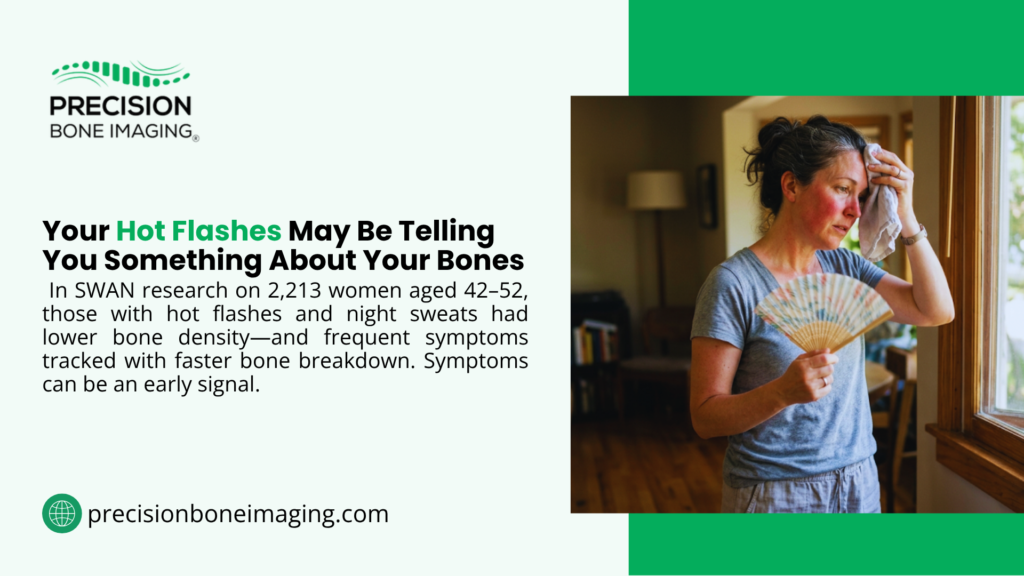
Why Bone Health Is a Foundation of Longevity
The stakes of perimenopause and bone loss extend well beyond fracture statistics. Strong bones protect mobility, physical confidence, and the capacity to live actively on your own terms for decades.
Research shows that more than 54 million Americans have low bone mass or osteoporosis, which can increase the likelihood of fractures later in life.
| Area | Impact of Strong Bones |
| Mobility | Greater support for confident movement and long-term mobility |
| Strength | Better balance and physical stability |
| Independence | Reduced risk of care-related limitations |
| Longevity | Active, self-directed quality of life |
Bone Health and Everyday Mobility
Low bone density often develops without obvious symptoms. Back pain, loss of height, or postural changes may sometimes reflect an unrecognized vertebral fracture rather than low density alone.
Taking action during perimenopause can support strength, balance, and long-term mobility while helping women identify risks before a more serious event occurs.
The Hidden Connection Between Strong Bones and Healthy Aging
Bones are metabolically active tissue. They interact with hormonal and immune pathways throughout life and serve as a measurable marker of overall physiological resilience.
Bone health in your 40s and 50s is not just a fracture prevention issue. It is one meaningful marker of the strength, mobility, and physiological resilience needed for healthy aging.
How to Support Bone Health During Perimenopause
The most evidence-backed approach to perimenopause and bone loss combines nutrition, resistance exercise, and regular assessment as a complete strategy.
Calcium, vitamin D, and protein all contribute to bone health, but intake needs differ by age, diet, laboratory findings, and medical history. Food should provide as much of the foundation as practical, while supplementation decisions are best made with a qualified healthcare professional.
A broader nutritional framework also emphasizes adequate protein, approximately 0.8–1.0 grams per pound of ideal body weight, rather than focusing on calcium alone.
On the exercise side, women in early post-menopause who committed to rigorous resistance programs gained an average of 1.5% in bone mineral density in just nine months.
For women who want to know how to slow bone loss naturally, these habits produce measurable results. The key is to start them during perimenopause, not after it ends.
| Habit | Bone Health Benefit |
| Progressive resistance training | Applies increasing muscular force to the skeleton while supporting strength and balance. |
| Appropriate impact training | Provides site-specific mechanical stimulus that can support bone maintenance or formation |
| Osteogenic Loading | Provides a brief, targeted high-intensity skeletal stimulus intended to support the bone-remodeling response |
| Protein intake of approximately 0.8–1.0 grams per pound of ideal body weight | Supports the collagen-rich structural matrix of bone and helps maintain muscle |
| Calcium-rich foods | Primary mineral for bone maintenance |
| Vitamin D (food and sun exposure) | Enables effective calcium absorption |
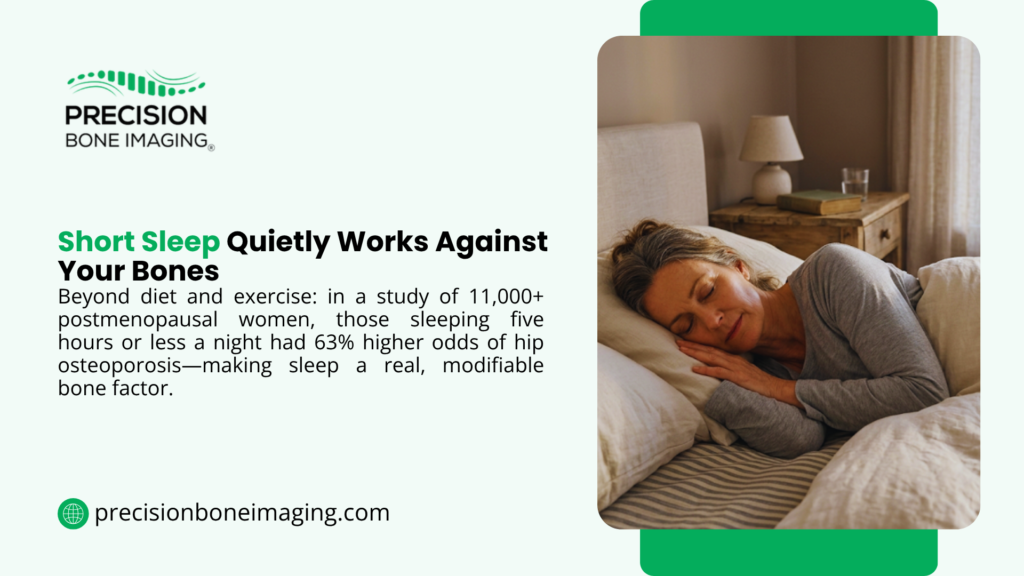
| Quality sleep | Supports cellular bone repair |
| Alcohol reduction | Lowers bone breakdown risk |
| Smoke cessation | Slows accelerated bone loss |
Daily and Weekly Bone Health Habits: A Practical Checklist
- Include progressive resistance training two to three times per week, based on your ability and professional guidance.
- Add appropriate impact training, such as jumping, hopping or brisk weight-bearing movement, when it is safe for you.
- Consider Osteogenic Loading as another targeted way to provide the high-intensity skeletal stimulus associated with bone formation.
- Prioritize calcium-rich foods, including dairy products, leafy greens, fortified alternatives and sardines.
- Support vitamin D status through appropriate food, sunlight and supplementation guidance.
- Maintain adequate protein intake, generally around 0.8–1.0 grams per pound of ideal body weight, while accounting for individual health needs and professional guidance.
- Limit alcohol, avoid smoking and make adequate sleep part of your bone-health routine.
Resistance, Impact Training and Osteogenic Loading
Bones respond to mechanical stimulus, but different forms of activity provide that stimulus in different ways. Progressive resistance exercises such as squats, deadlifts, lunges and loaded carries can support the hips and spine while also improving muscle strength and balance.
Appropriate impact training adds a faster weight-bearing stimulus, while Osteogenic Loading provides another targeted form of high-intensity skeletal loading. The right combination depends on current bone health, fracture history, physical ability, and professional guidance.
Nutrition Habits That Support Strong Bones
Protein matters as much as calcium for bone structure. Research links adequate protein intake to higher bone mineral density in older adults, as long as calcium and vitamin D needs are also met.
Why Progress Needs to Be Measured
What gets measured gets managed. Lifestyle habits take months to reflect in bone health markers. A consistent baseline and follow-up assessment can provide objective information on whether bone health findings change over time.
For women who want more than a one-time assessment, the Bone Health Blueprint connects REMS findings with ongoing education, nutrition and supplement resources, exercise guidance and follow-up monitoring.
Understanding Bone Health Assessments During Perimenopause
For women who want to get ahead of perimenopause and bone loss, a baseline bone health assessment provides the most direct path to clarity.
Conventional screening guidance and prevention-first assessment are not the same. The 2025 U.S. Preventive Services Task Force recommends screening all women aged 65 and older. For postmenopausal women younger than 65, it recommends evaluating recognized risk factors and using a clinical risk-assessment tool to determine whether screening is appropriate.
Precision Bone Imaging takes a more proactive baseline approach. Because bone loss can accelerate during perimenopause, women may benefit from understanding their bone health during this transition, or earlier when family history, a previous fracture, low body weight, bone-impacting medication, or another risk factor is present.
This does not replace clinical screening guidance; it gives women an earlier opportunity to understand and track their bone health.
Yet the data tells a different story in practice. According to the Medical Expenditure Panel Survey, only about 25% of women aged 50 to 64 have ever had a bone density assessment. That gap may leave many women without a useful baseline during a period when bone loss can accelerate.
For women in this group, the question of when you should get a bone density test, and what a prevention-first schedule looks like, especially for women with recognized risk factors, deserves a clear answer now, not after a fracture forces the issue.
| Bone Density | Bone Quality |
| Amount of mineral content in bone tissue | Structural strength and architectural resilience |
| One component of overall fracture risk | Provides a more complete fracture risk picture |
| Measured by traditional bone scans | Assessed by advanced REMS technology |
What Can a Bone Health Assessment Reveal?
A REMS assessment provides findings about bone mineral density, bone quality and estimated five-year fracture risk. These findings can create a measurable baseline and support more informed conversations with a qualified healthcare professional about nutrition, exercise, supplements and appropriate follow-up.
The goal is clarity: a concrete picture of where things stand today, paired with a measurable baseline for the months and years ahead.
This assessment is for informational purposes only and does not replace medical care.
Why Bone Quality Matters Alongside Bone Density
Bone density measures how much mineral content is present in bone tissue. Bone quality reflects the internal architecture and structural resilience of that tissue.
For example, two women with near-identical density scores can carry very different fracture risk based on bone quality differences alone. Modern bone health assessments address both measures in a single session.
FAQs About Perimenopause and Bone Loss
Can perimenopause cause bone loss?
Yes, perimenopause and bone loss are directly linked through the estrogen-bone relationship. As estrogen fluctuates and declines during the transition, the bone renewal cycle tilts toward breakdown.
Research confirms that the fastest phase of bone loss often occurs during the transition itself, not years after it ends.
How fast does bone loss occur during perimenopause?
Women lose an average of 1 to 2% of bone density per year once the transition begins, with annual losses of 3 to 5% in some cases. Around 25% of women in the menopausal transition are classified as fast bone losers, with a decline greater than 7% over two years.
How can I support bone health naturally?
A comprehensive bone-health strategy can include progressive resistance training, appropriate impact training, Osteogenic Loading, calcium-rich foods, adequate vitamin D and approximately 0.8–1.0 grams of protein per pound of ideal body weight. Exercise and supplement decisions should reflect current bone health, fracture history, and appropriate professional guidance.
When should women establish a bone-health baseline?
Because bone loss can accelerate during perimenopause, Precision Bone Imaging encourages women to consider establishing a baseline during this transition, or earlier when risk factors are present.
An assessment around peak bone mass, generally reached near age 30, can provide even earlier context. This prevention-first approach goes beyond conventional population-level screening guidance and does not replace medical care.
What is the difference between bone density and bone quality?
Bone density reflects how much mineral content is in the bone. Bone quality describes the structural integrity and resilience of bone tissue itself. Both contribute to real-world fracture risk. A comprehensive bone health assessment measures both in a single session.
Key Takeaways
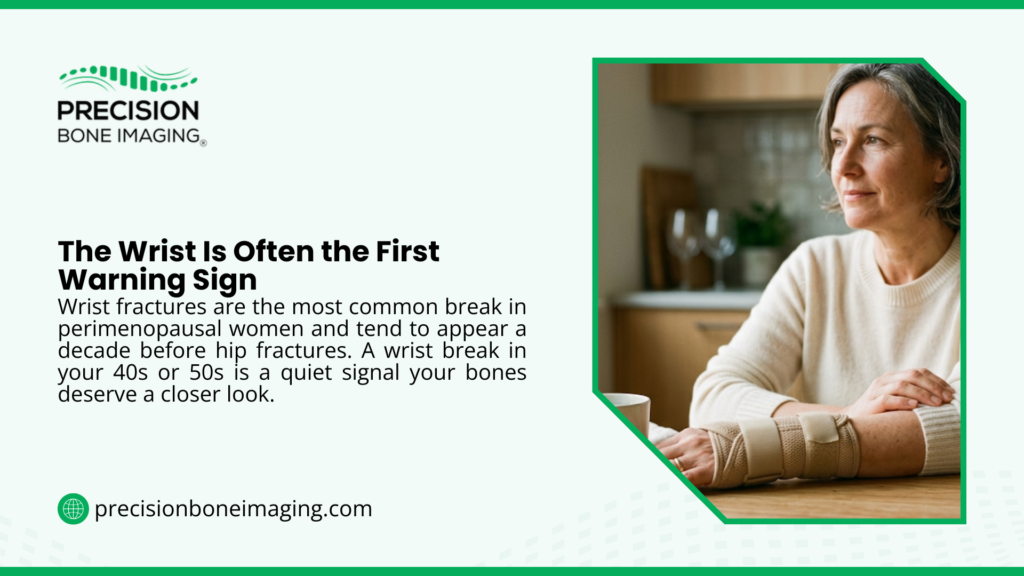
Perimenopause and bone loss are directly linked, and that connection starts years before most women expect. Prevention carries far greater impact than recovery.
Proactive steps involving exercise, nutrition, and appropriate assessment can support bone strength and provide a clearer basis for protecting mobility and independence over time.
Take the First Step Toward Bone Health Clarity
Perimenopause is an important window for establishing a baseline and addressing bone-health risks before further hormonal changes occur. Each year without a clear baseline is a year of change that cannot be tracked or measured.
Precision Bone Imaging provides radiation-free REMS assessments through locations and mobile scan events across California, Arizona and Colorado, with additional U.S. markets being added. Each assessment provides same-day findings about bone mineral density, bone quality and estimated five-year fracture risk.
The Echolight EchoS device used for REMS is FDA-cleared and uses ultrasound rather than ionizing radiation. REMS is also designed to reduce the influence of certain artifacts that can complicate DXA readings, although technical limitations may still apply when implants, spinal surgery, or other structural changes are present.
Book your radiation-free REMS assessment with Precision Bone Imaging to establish a baseline, understand your bone density and quality, and begin a clearer journey from assessment to education and ongoing progress tracking.
This assessment is for informational purposes only and does not replace medical care.